













Avian Ancestors: Dinosaurs That Learned to Fly

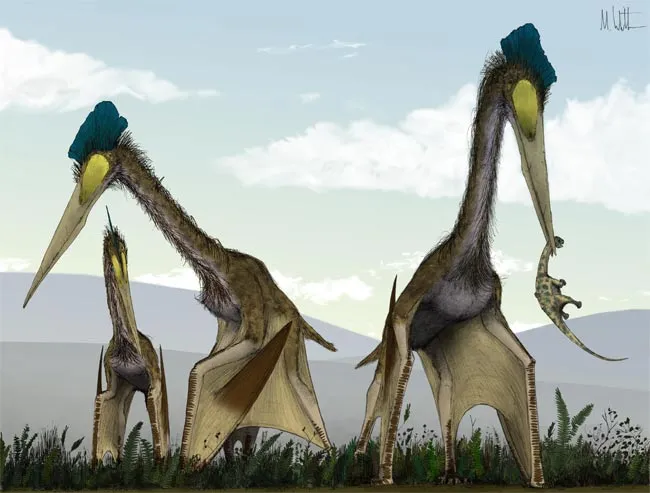
Archaeopteryx

When it was first discovered in Germany in 1861, Archaeopteryx was hailed as the missing link between birds and dinosaurs and proof for the theory of evolution. This raven-sized animal lived about 150 million years ago and had feathers identical to that of modern flying birds. But Archaeopteryx also had sharp teeth, a long bony tail and clawed fingers.
Beipiaosaurus
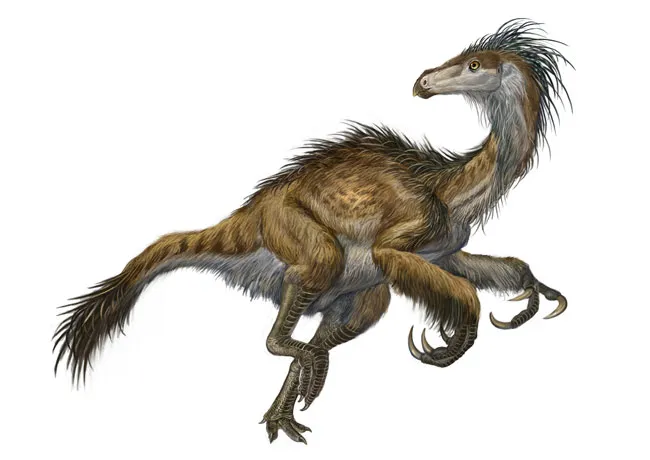
At 7 feet long and 3 feet tall, Beipiaosaurus is one of the largest known feathered theropods the group of swift upright dinosaurs from birds are thought to be descended. For a long time, scientists didn't know how to classify Beipiaosaurus because it shared characteristics more commonly found among plant eating dinosaurs. It lived about 125 million years ago and had a toothless beak, cheek teeth that it used to chew plants and the beginnings of a bulging pot belly. But theropods are the only group of dinosaurs so far known to have feathers, and many scientists take Beipiaosaurus' feathers as evidence for it being a theropod.
Caudipteryx

Caudipteryx was a peacock-sized theropod that lived about 125 million years ago. And just like a peacock, it had long plumed tail-feathers that it may have fanned out for display. Caudipteryx also had down feathers covering most of its body that helped to keep it warm.
Coelophysis
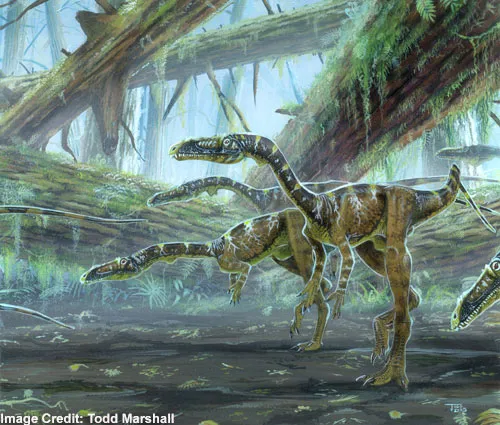
Coelophysis was a small, compact dinosaur that lived about 210 million years ago. It was a quick and agile hunter that had hollow bones and a hole-ridden skull, which helped to reduce its weight and increase its speed. Some fossils have been found with other small Coelophysis bones inside, and at first, it was thought that Coelophysis might have given birth to live young. It is now believed, however, that it was probably a cannibal that occasionally devoured its own young.
Compsognathus

Compsognathus is one of the smallest dinosaurs ever discovered. It lived about 150 million years ago and was possibly an early relative of Archaeopteryx. Compsognathus had long legs, hollow bones and a long rigid tail that it used to balance itself while chasing down quick-footed prey.
Confuciusornis

About the size of a crow, Confuciusornis is the earliest known bird to have a true beak. It lived about 10 to 15 million years after Archaeopteryx, but like its early ancestor, it still had clawed fingers. Males were typically larger than females and sported long, narrow tail feathers that they may have used to attract mates. Some scientists question whether Confuciusornis was a direct ancestor of modern birds. They propose instead that it was a cousin that early on went its own separate way.
Dilong

This early cousin of Tyrannosaurus rex lived about 130 million years ago and was covered in hairlike protofeathers, which are precursors to the feathers of modern birds. It is named after the mythical Chinese Emperor dragon, Dilong, and from the fact that it was "paradoxically," small and feathered. The feathers were probably used for warmth, and scientists suspect that juvenile T-rexes might also have had feathers, and that the feathers were shed as the animal matured.
Get the world’s most fascinating discoveries delivered straight to your inbox.
Dromaeosaurus
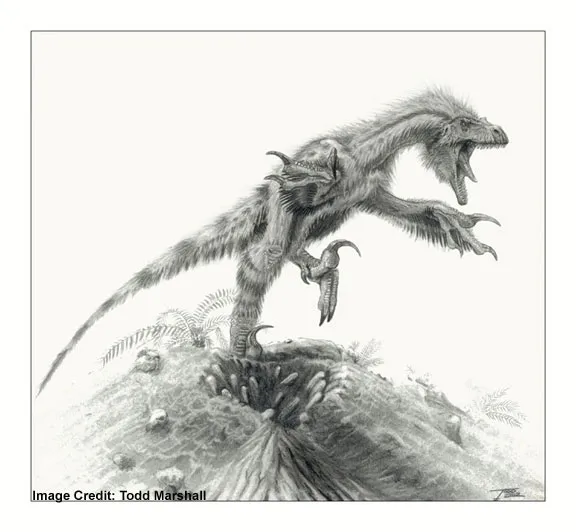
Dromaeosaurus was a small, fast-moving predator that lived about 170 million years ago. It was about 6 feet long and was a dromaeosaurid, the family of dinosaurs that also includes Velociraptor. It had excellent vision, thanks to its large eyes, and scientists think that it also had a strong sense of smell and good hearing. Dromaeosaurus teeth have been found among the fossils of much larger animals, leading some scientists to suspect that it may have hunted in packs. It is also possible that Dromaeosaurus was a scavenger.
Falcarius
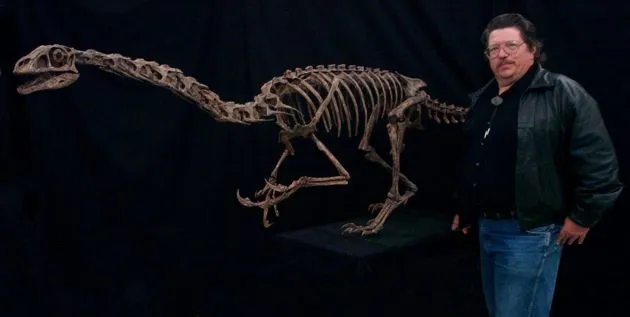
Scientists have long suspected that the lumbering plant-eating dinosaurs evolved from small fleet-footed predators, but no fossil had ever been found to support this theory. That is why many scientists were excited when Falcarius was discovered earlier this year, because it shared traits common to both groups. Falcarius lived about 125 million years ago and had unwieldy sickle-shaped claws, but short squat legs that would not have been very useful for chasing down prey. It also had the beginnings of a large pot-belly and leaf-shredding teeth.
Longisquama

This tiny animal is one of the reasons why the evolutionary link between birds and dinosaurs is still an issue of debate. It is the oldest animal ever known to have what appears to be feathers, but it was not a dinosaur. Rather, Longisquama was a small reptile, a lizard-sized creature that lived in Central Asia 220 million years ago. It walked on four legs and had feather-like appendages protruding from its spine, which it may have used to glide between trees.
Mei long

Mei long was a small duck-sized dinosaur that lived about 130 million years ago. In Chinese, its name means "soundly sleeping dragon," a reference to the posture in which it was discovered: curled up with its head tucked under a forelimb. This posture is identical to that used by modern birds while dozing. Scientists think that birds sleep this way to keep warm, and the discovery of Mei long supports the theory that some dinosaurs were warm-blooded like modern birds.
