













Gallery: An Expedition Into Iceberg Alley

Down Iceberg Alley
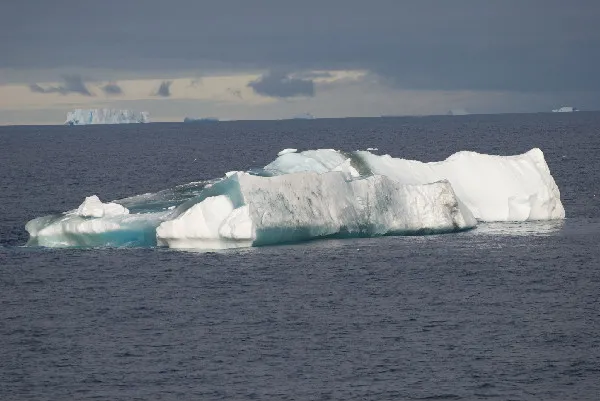
Ken Smith, from the Monterey Bay Aquarium Research Institute, and researchers from over a dozen institutions spent three month-long cruises in a part of Antarctica's Weddell Sea they dubbed "iceberg alley." Here, and elsewhere, more icebergs are breaking off ice shelves that extend from the continent. [Ice World: Gallery of Awe-Inspiring Glaciers]
Fertilizing the Ocean

Icebergs such as this one carry iron-rich sediment from Antarctica out into the Southern Ocean. The darker parts of the ice contain higher concentrations of sediment.
Antarctic Sunlight

During the research team's 2009 cruise, the low Arctic sun cast the shadow of the research vessel Nathanial Palmer on the side of this large tabular iceberg.
Chasing Icebergs

Instead of avoiding icebergs, the research vessel Nathanial Palmer approached very closely to these floating "islands" of ice during this five-year research project.
Dropping the Trap

Researchers programmed this Lagrangian sediment trap (the gray tube with white funnels) to sink 1969 feet (600 meters) below the surface as a large iceberg drifted overhead where it would collect sinking debris for about three days.
The Catch

Researchers and crew members used a small boat to lift the trap carefully out of the water and then hoisted it onto their research vessel after it is done collecting samples.
Examining the Samples

Ken Smith (left), Alana Sherman (right), and other members of the research team examine a Lagrangian sediment trap after it was brought back on board the research vessel.
Get the world’s most fascinating discoveries delivered straight to your inbox.
Mechanical Explorer

This small remotely operated vehicle (ROV) was customized to collect video and water samples underneath Antarctic icebergs.
ROV Launch

Researchers launch the small remotely operated vehicle (ROV).
Iceberg Air

Researchers launched this remotely controlled plane from the deck of the research vessel Nathanial Palmer to collect video of icebergs and drop GPS tracking devices on top of icebergs.
