













Album: Bizarre Frogs, Lizards and Salamanders

Teensy Frog

The Gardiner's Seychelles frog is a pipsqueak, growing to a max length of just 11 millimeters or smaller than your thumbnail. This species along with another Seychelles frog are now found only on the Seychelles islands of Mahe and Silhouette.
Purple Frog

The purple frog is a burrowing species that spends most of the year up to 13 feet (four meters) underground feeding on termites.
Ghost Frogs

Two ghost frog species, Hewitt's ghost frog (shown) and the Table Mountain ghost frog, made the top-10 list. Both live on southern tip of South Africa. The Table Mountain ghost frog is found in Skeleton Gorge, which is where local people traditionally buried their dead.
Lungless Frog

The Bornean flat-headed frog (Barbourula kalimantanensis) which is 2.8-inch-long (7 cm) is the world’s first lungless frog. Instead of lungs, the slimy amphibian breathes through its skin. Other organs can be found in the place lungs would normally be, which makes the overall appearance of the frog flatter.The flatter body shape means more surface area relative to volume with which to absorb oxygen. In addition, the squashed shape is more aerodynamic, allowing the frogs to maneuver better in the fast-flowing streams in the Kalimantan rainforest where the species lives.
Dwarf Salamander

One of three newly discovered salamanders in Costa Rica is from the Nototriton (dwarf salamander) genus and is a mere 1 inch (3 centimeters) in length, with red-brown coloring and black markings on its side.
Fanged Frog

A fanged frog discovered in Thailand likely feeds on birds as part of its diet, as scientists have found feathers in the frog's feces.
Horned Lizard

This coast horned lizard from Torrey Pines State Park is distinctly different from populations in central and southern Baja California, and has been designated a new species, Phrynosoma blainvillii.
Get the world’s most fascinating discoveries delivered straight to your inbox.
Spray Toad

Zoos have bred hundreds of the penny-sized Kihansi spray toad, a species considered extinct in its wild habitat in an isolate river gorge in Tanzania.
Color-changing Frog

Called Rhacophorus penanorum, this tiny frog species, whose males grow to just 1.4 inches (3.5 centimeters), was discovered in Gunung Mulu National Park, Sarawak, in the Heart of Borneo. Also called the Mulu flying frog, the amphibian has a small pointed snout and is unusual in that the species has bright green skin at night but changes color to display a brown hue during the day. Its eyes follow suit to change color as well. And while the minute animal may not fly with the birds, it uses its webbed feet and aerodynamic flaps of skin on the arms and legs to glide from tree to tree.
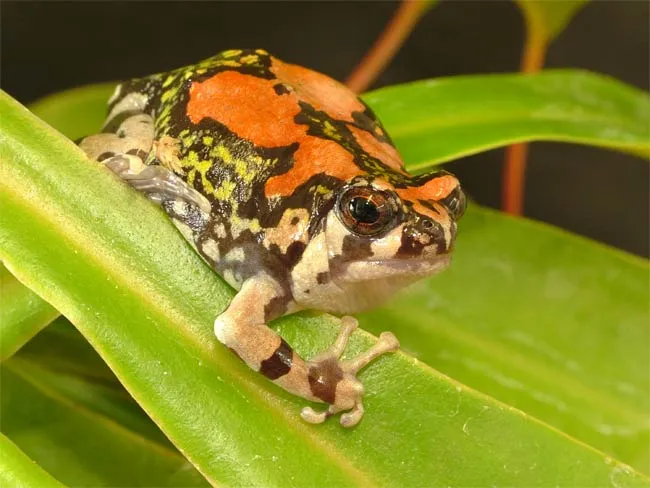
Rainbow Frog

The Malagasy rainbow frog lives underground for up to 10 months in a limestone canyon system in southern Madagascar. The frogs surface to breed during the rainy season.
