













Man in China dies of rare 'monkey B' virus
It's the first reported human case of this virus in China.

A veterinarian in China has died after he contracted an extremely rare viral infection known to infect monkeys, according to news reports.
The 53-year-old veterinarian is the first known human case of this virus, called monkey B virus, to be reported in China, according to The Washington Post.
The man worked as a veterinary surgeon at a Beijing-based institute that specializes in experimental research in non-human primates, according to a report from the Chinese Center for Disease Control and Prevention. In early March, he dissected two dead monkeys; one month later, he developed a fever, nausea, vomiting, and neurological symptoms, the report said. Despite treatment at several hospitals, the man died on May 27.
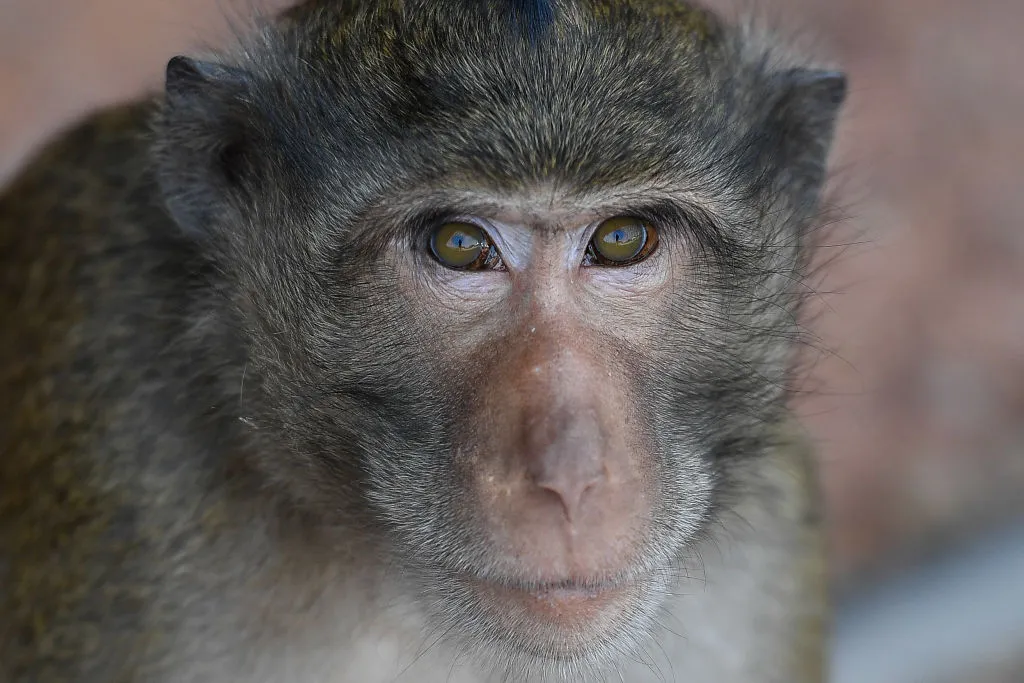
Doctors diagnosed the man with monkey B virus, also known as B virus. The virus most commonly infects macaque monkeys, and it is rarely seen in humans — there have been just 50 human cases of the virus reported since it was discovered in 1932, according to the U.S. Centers for Disease Control and Prevention (CDC). But when the virus does "jump" from monkeys to people, it is often deadly — of the 50 people infected, 21 have died, the CDC said. Most of the human cases have occurred in people who work with monkeys, such as veterinarians or researchers, the Post reported.
Once the virus jumps to humans, it doesn't spread easily between people. There has been just one reported case of a B virus infection in a human spreading to another person, according to the CDC.
RELATED CONTENT
The novel coronavirus is also thought to have emerged from a "zoonotic" source, meaning it jumped from animals to people. But for the B virus, humans are a "dead-end," Dr. Nikolaus Osterrieder, dean of Jockey Club College of Veterinary Medicine and Life Sciences in Hong Kong, told the Post. "It's not jumping from one human to another human."
Still, Chinese health officials said the new report suggests that the virus "might pose a potential zoonotic threat" to people who work with monkeys; and so it is necessary to "strengthen surveillance in laboratory macaques and occupational workers in China."
Get the world’s most fascinating discoveries delivered straight to your inbox.
Monkey B virus is different from monkeypox virus. Monkey B virus belongs to a family of viruses called herpesviruses — the same family that includes human herpes simplex 1, which typically causes cold sores, and herpes simplex 2, which causes genital herpes. Monkeypox virus, on the other hand, belongs to a family of viruses called orthopoxviruses, and is related to the virus that causes human smallpox.
Originally published on Live Science.

Rachael is a Live Science contributor, and was a former channel editor and senior writer for Live Science between 2010 and 2022. She has a master's degree in journalism from New York University's Science, Health and Environmental Reporting Program. She also holds a B.S. in molecular biology and an M.S. in biology from the University of California, San Diego. Her work has appeared in Scienceline, The Washington Post and Scientific American.