













Mars Missions Stop in Their Tracks as Red Planet Drifts to the Far Side of Sun
With the sun between Earth and Mars, messages can get garbled.

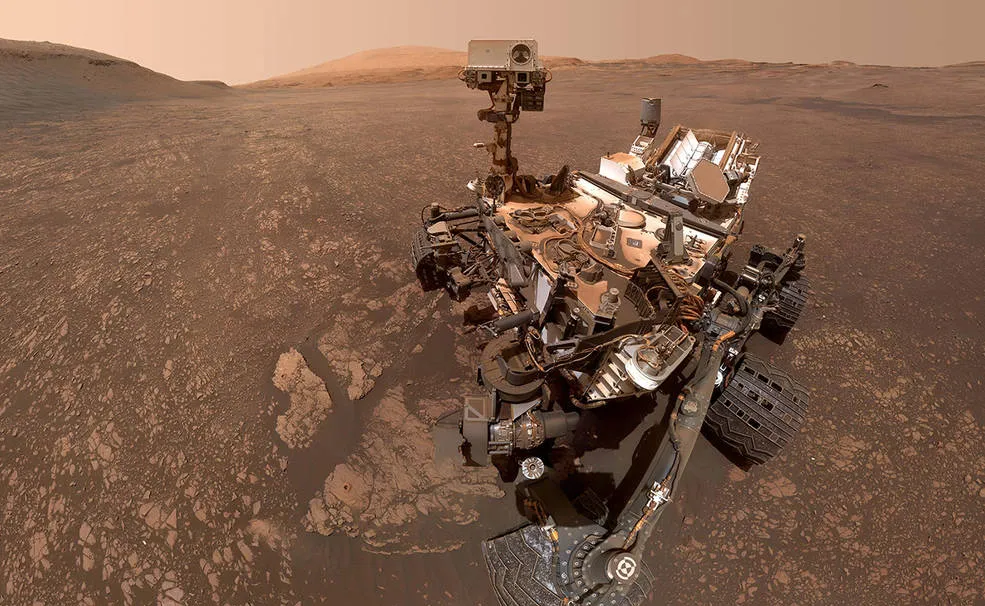
All of NASA's spacecraft on Mars are about to find themselves on their own, running simplified routines and cut off from their masters on Earth. That's because something big is about to come between the two planets — an electromagnetic energy source that's too powerful to broadcast through or around: the sun.
During this period, known as the Mars solar conjunction, our home star and its corona pass between Earth and the Red Planet. Some radio signals might still get through, according to a statement from NASA's Jet Propulsion Laboratory (JPL), but they aren't reliable. Fortunately for all those distant robots, NASA knows this happens every couple years, and the machines are well prepared for the coming quiet period.
"Our engineers have been preparing our spacecraft for conjunction for months," Roy Gladden, manager of the Mars Relay Network, said in the statement. "They'll still be collecting science data at Mars, and some will attempt to send that data home. But we won't be commanding the spacecraft out of concern that they could act on a corrupted command."
Related: Voyager to Mars Rover: NASA's 10 Greatest Innovations
Between Aug. 28 and Sept. 7, the Curiosity Rover will stop in its tracks and the InSight lander won't move its robotic arm, according to the statement. The spacecraft will keep beaming data up to NASA's two orbiters around the planet, but most of that data will stay put until the conjunction ends. Any data that the orbiters do attempt to send back, by way of relays through other spacecraft in deep space, will have to be double-checked once full communications are restored. Other Mars missions will also be more or less paused for the time being, resorting to simple, passive data collection tasks.
Neither of the other space agencies that have active missions on Mars — the European Space Agency (which operates the Mars Express orbiter) or the Indian Space Research Organization (which operates the Mars Orbiter Mission) — have detailed their plans for the convergence. But neither have any deep space relays more developed than NASA's, so they're likely subject to similar limitations during the quiet period.
- 5 Mars Myths and Misconceptions
- Mars InSight Photos: A Timeline to Landing on the Red Planet
- Ancient Mars Could Have Supported Life (Photos)
Originally published on Live Science.
Get the world’s most fascinating discoveries delivered straight to your inbox.
