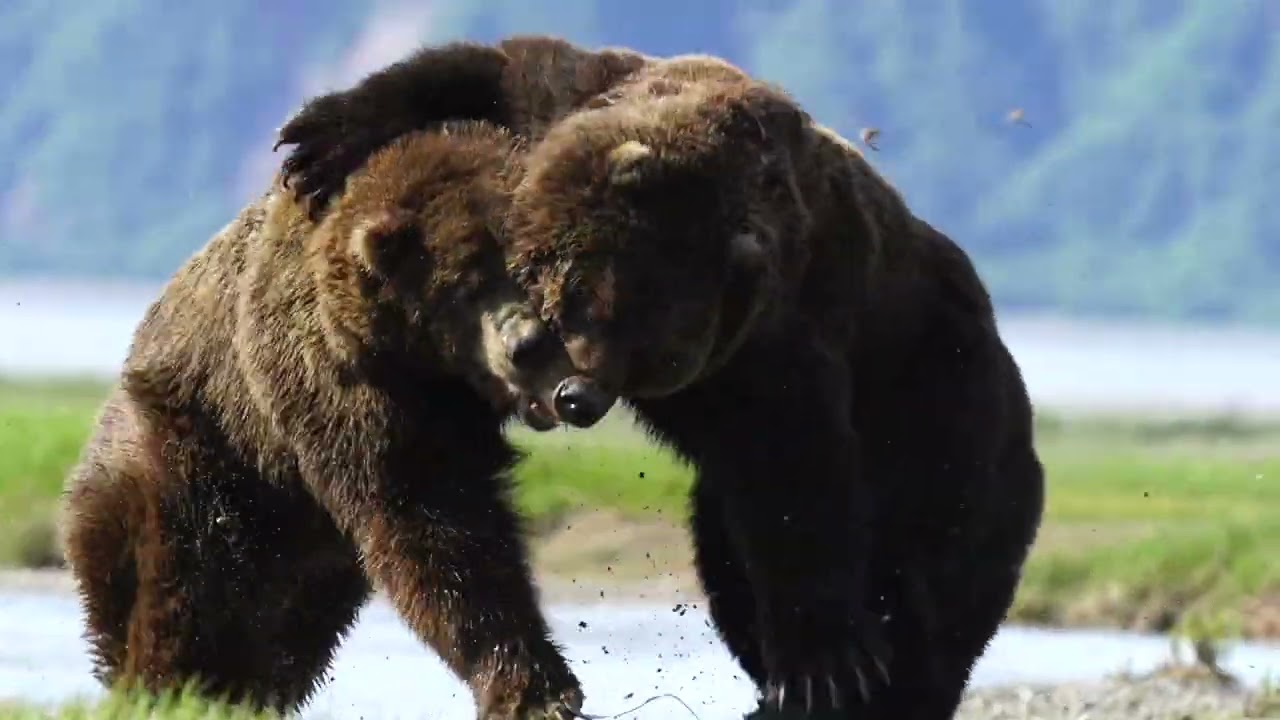
A wildlife photographer in Alaska caught two massive male grizzly bears on video in what he said was "the longest, most intense bear interaction I have ever witnessed."
On May 8, Brad Josephs was visiting Lake Clark National Park and Preserve in southern Alaska when he caught the two grizzly bears (Ursus arctos horribilis) going head-to-head in a show of dominance during mating season, according to Outside magazine. The fight wasn't between equals, either; one male was larger and older while the other was smaller and younger, according to PetaPixel.
Josephs uploaded the video to his YouTube channel, where it has already received more than 252,000 views.
"It just kept going and going,” Josephs told Outside magazine. “I was astounded by the determination and stamina of both bears as they battled for mating season dominance rights."
Related: Hungry grizzly bear photo-bombs camera trap in award-winning photo
The heart-pounding video, which lasts nearly nine minutes, begins with the two males posturing on all fours before eventually standing on their hind legs and wrestling each other. At one point, the bears can be seen catching their breath before going in for round two.
On average, grizzly bears stand at 3 to 5 feet (0.9 to 1.5 meters) tall at the shoulder when on all fours, but can reach a height of nearly 9 feet (2.7 m) on their hind legs. Male grizzly bears can weigh up to 860 pounds (390 kilograms).
Mating season for the bears usually runs from May through July and it's not uncommon for larger males to chase away smaller males, while "evenly-matched" males will fight for dominance as seen in this video, according to the North American Bear Center.
At the end of the video, one of the bears admits defeat and backs down by bowing his head in submission.
"He's got his head down, he's basically saying, 'I'm sorry, I lost,'" Josephs said in the clip. "And the winner walks away."
Alaska has the highest population of grizzly bears in any state or province. Of the 60,000 wild grizzly bears located throughout North America, around 30,000 are found in Alaska, according to PetaPixel.