













New Wheat is Totally Sweet
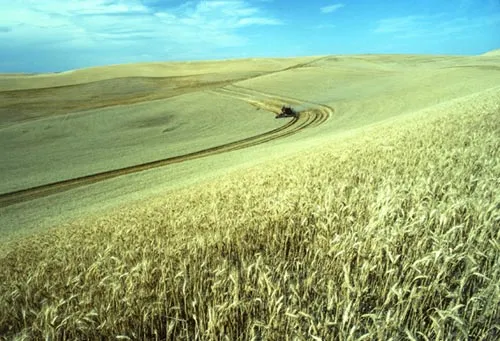
Japan’s National Agriculture and Food Research Organization (NARO) and Nippon Flour Mills announced the development of a new "sweet wheat" plant on Dec. 12. Sweet wheat is a hybridized variety of wheat with twice the sugar of its ancestor.
The first of its kind, sweet wheat would reduce or eliminate the need to add sugar when it is used in cakes, baked goods or cereals.
Repeated breeding of wheat varieties with low levels of enzymes associated with starch production reduced starch levels—usually around 70 percent—down to 25 percent (see development photo). The resulting sweet wheat has a much higher concentration of sugars like maltose and sucrose.
The new wheat should be available commercially in two or three years; researchers will use the intervening time to develop recipes.
This new development is not to be confused with wheatgrass, which is also sometimes called "sweet wheat." Wheatgrass is a plant (genus Agropyron) whose fresh leaf buds can be pressed to create a juice. The use of wheatgrass as a tonic dates from the early 1900's; Hungarian philosopher Edmund Bordeaux Szekely claimed to have translated an ancient manuscript in the Vatican archives that described its use by the Essenes in biblical times.
For other developments in futuristic plant use, see
- Tumblin' Tumbleweeds Lend Hand In Depleted Uranium RoundupAn early study indicates that the humble tumbleweed may be able to help humans round up depleted uranium from contaminated soil
- Algae To Clean AtmosphereAtmospheric cleansing by means of carefully selected algae has been suggested before by science fiction writers.
- Earth Skunk Cabbage And Martian Desert CabbageSF writer Robert Heinlein also described cabbages that could regulate their internal temperature.
Via PinkTentacle.
Get the world’s most fascinating discoveries delivered straight to your inbox.
(This Science Fiction in the News story used with permission from Technovelgy.com - where science meets fiction.)