













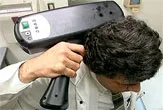
A magnetic pulse technique originally developed to treat psychological disorders like depression has been modified to zap away migraines before they can fully form.
In a recent study, researchers tested a device called a transcranial magnetic stimulator, or TMS for short, on a small group of 43 migraine sufferers.
The TMS generates a strong, one millisecond magnetic pulse that interrupts the symptoms leading up to a migraine, called the "aura" phase. Many migraine sufferers report zigzagging lines or bright flashes of light in their vision during this phase, as well as spreading blind spots and tingling sensations in their arms and legs.
Drawing a line
Magnetic pulses from the TMS device alter the firing patterns of brain cells in the outermost layer of the brain, called the cortex. Like the fire lines that crews carve out to stymie forest fires, the changes in brain cell activity interrupt the auras before they spread to other parts of the brain and induce full-blown migraines.
In the study, 74 percent of the people who used the TMS device reported feeling only mild or no headaches afterwards. The relief was often felt immediately. Ability to function at work after two-hours also improved, and no side effects were reported.
The results from the study will be presented today at the annual American Headache Society meeting in Los Angeles.
Get the world’s most fascinating discoveries delivered straight to your inbox.
"The device's pulse is painless," said study team member Yousef Mohammad, an associate professor of neurology at Ohio State University. "The patients have felt a little pressure, but that's all."
The researchers recently created a portable version of their device.
In the brain
Migraines are estimated to affect some 28 million Americans and are three times more common in women than in men.
Migraines are typically more severe than common headaches and originate in the brain, Mohammad explained in a telephone interview. So-called "tension" headaches, in contrast, are the result of stress in the muscles of the head and face.
Scientists still aren't sure what causes migraines, although a recent study linked them to low levels of a chemical called serotonin in the brain. That study also found that migraine sufferers report higher levels of sexual desire than people with tension headaches.
TMS devices were originally developed in the 1980s and many are currently awaiting FDA approval for the treatment of psychological disorders such as depression and auditory hallucinations.
The researchers plan to test their device in a larger, 200-person study.