














Wanted Alive: Lost Amphibians

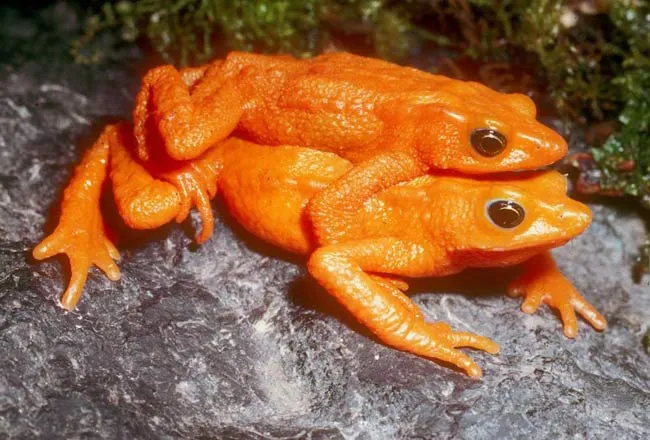
Scientists are set to begin combing forests for as many as 100 species of "lost amphibians" — animals considered possibly extinct but that may be holding on in a few remote places.
The first-of-its-kind search, covering 14 countries on five continents, will be the first coordinated effort to find so many potentially extinct creatures.
Amphibian populations are suffering a shocking decline worldwide, with half the 6,000 known species in decline and more than 30 percent threatened with extinction. Many of the amphibians that the scientists are looking for have not been seen in decades — in some cases, nearly 100 years. [Images: Top 10 Lost Amphibians]
Scientists are hoping to better understand the recent amphibian extinction crisis.
"Amphibians are particularly sensitive to changes in the environment, so they are often an indicator of damage that is being done to ecosystems," said Robin Moore, a search team member from the nonprofit group Conservation International. "But this role as the global 'canary in a coal mine' means that the rapid and profound change to the global environment that has taken place over the last 50 years or so — in particular, climate change and habitat loss — has had a devastating impact on these incredible creatures.
"We've arranged this search for lost species that we believe may have managed to hang on so that we can get some definite answers — and hopefully learn about what has allowed some tiny populations of certain species to survive when the rest of their species has been lost."
The culprits behind the amphibians' decline include pollution, climate change, habitat loss from development, and a fungal infection that causes chytridiomycosis, a disease that has wiped out entire populations, including some whole species, of amphibians.
Get the world’s most fascinating discoveries delivered straight to your inbox.
The exact toll of these factors on the once-thriving populations of amphibians in the United States is unknown. Amphibian declines are particularly serious in California, the Rocky Mountains, the Southwest and Puerto Rico. Scientists hope the new search will fill gaps in their knowledge.
"This is something that has never been done before and is hugely significant, not only because of the threats that amphibians face and our need to understand what has been happening to them better, but also because it represents an incredible opportunity for the world's amphibian scientists to rediscover long-lost species," said search team member Claude Gascon, of the International Union for Conservation of Nature's Amphibian Specialist Group.
"The search for these lost animals may well yield vital information in our attempts to stop the amphibian extinction crisis, and information that helps humanity to better understand the impact that we are having on the planet," Gascon said.
- 8 of the World's Most Endangered Places
- 10 Species You Can Kiss Goodbye
- How Many Species Exist on Earth?
This article was provided by OurAmazingPlanet, a sister site to LiveScience.
