













Jeffrey Epstein Dreamed of 'Improving' Humanity With a Baby-Making Ranch (and His DNA)

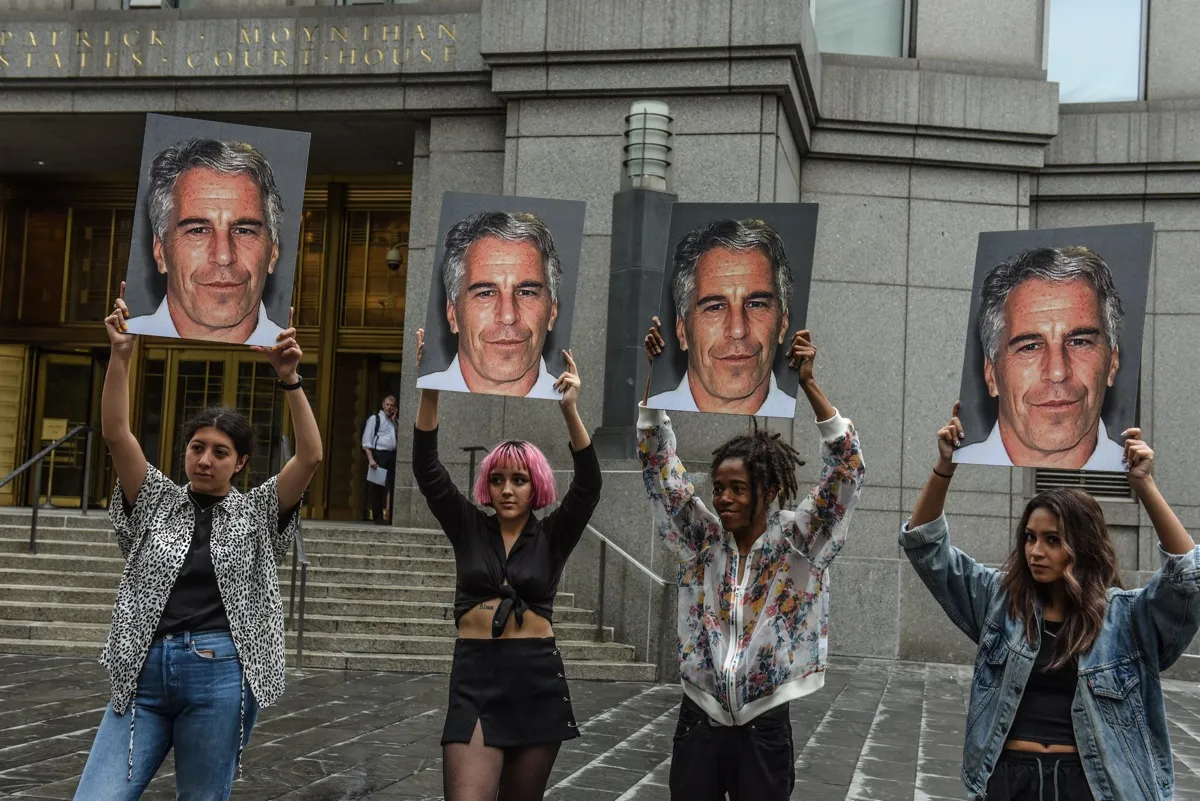
Accused sex trafficker Jeffrey Epstein toyed with an unorthodox plan for shaping the future of the human race: He imagined impregnating as many as 20 women at a time at his New Mexico ranch, distributing his DNA for the betterment of our species, The New York Times reported today (July 31).
Epstein is thought to have drawn inspiration from an ideology that had purportedly intrigued him for decades. Known as "transhumanism," it describes manipulating or augmenting human genetics using technologies such as artificial intelligence and gene-editing, according to the Times.
But Epstein's plan had closer ties to a precursor of transhumanism: eugenics. This now-discredited movement, once popular in scientific and academic circles in the Western world, also championed shaping a "better" human race, through selective breeding for certain traits. However, so-called undesirable traits were generally those associated with minorities and people who were poor and uneducated, according to the Historical Collections at the Claude Moore Health Science Libraries, at the University of Virginia(UV). [9 Absolutely Evil Medical Experiments]
Over many years, Epstein wined and dined a number of notable scientists and peppered them with questions and his own opinions about human genetics, according to the Times. He invited scientists to lavish parties and dinners, sponsored their attendance at conferences and even funded their research.
At many of these gatherings, Epstein would talk to researchers about DNA, "superior humans" and his plans for inseminating women at his ranch.
"It was not a secret," the Times wrote.
The concept of eugenics — breeding an "improved" human race by encouraging only intelligent and "healthy" people to have more children — emerged toward the end of the 19th century. In the United States and Germany, those who championed eugenics also stoked fears of "race degeneration," suggesting that the human race would become weaker, sicker and less intelligent due to higher reproductive rates among poor people and people of color, according to the UV Historical Collection.
Get the world’s most fascinating discoveries delivered straight to your inbox.
But despite Epstein's avid interest in establishing a personal breeding program, there is no evidence that his baby-making project ever got off the ground, the Times reported.
- Super-Intelligent Machines: 7 Robotic Futures
- Top 10 Things That Make Humans Special
- 7 Medical Myths Even Doctors Believe
Originally published on Live Science.

Mindy Weisberger is a science journalist and author of "Rise of the Zombie Bugs: The Surprising Science of Parasitic Mind-Control" (Hopkins Press). She formerly edited for Scholastic and was a channel editor and senior writer for Live Science. She has reported on general science, covering climate change, paleontology, biology and space. Mindy studied film at Columbia University; prior to LS, she produced, wrote and directed media for the American Museum of Natural History in NYC. Her videos about dinosaurs, astrophysics, biodiversity and evolution appear in museums and science centers worldwide, earning awards such as the CINE Golden Eagle and the Communicator Award of Excellence. Her writing has also appeared in Scientific American, The Washington Post, How It Works Magazine and CNN.