A Portuguese cathedral built more than 800 years ago has a high-walled exterior that resembles the ramparts of a medieval fortress. But these fortifications were powerless against an insidious enemy that penetrated the cathedral walls from within — black fungus.
The Old Cathedral of Coimbra (Sé Velha de Coimbra) stands on a hillside in the city center of Coimbra, Portugal. It was constructed between the late 12th and early 13th centuries on the grounds of the University of Coimbra, Alta and Sofia — a UNESCO World Heritage Site since 2013.
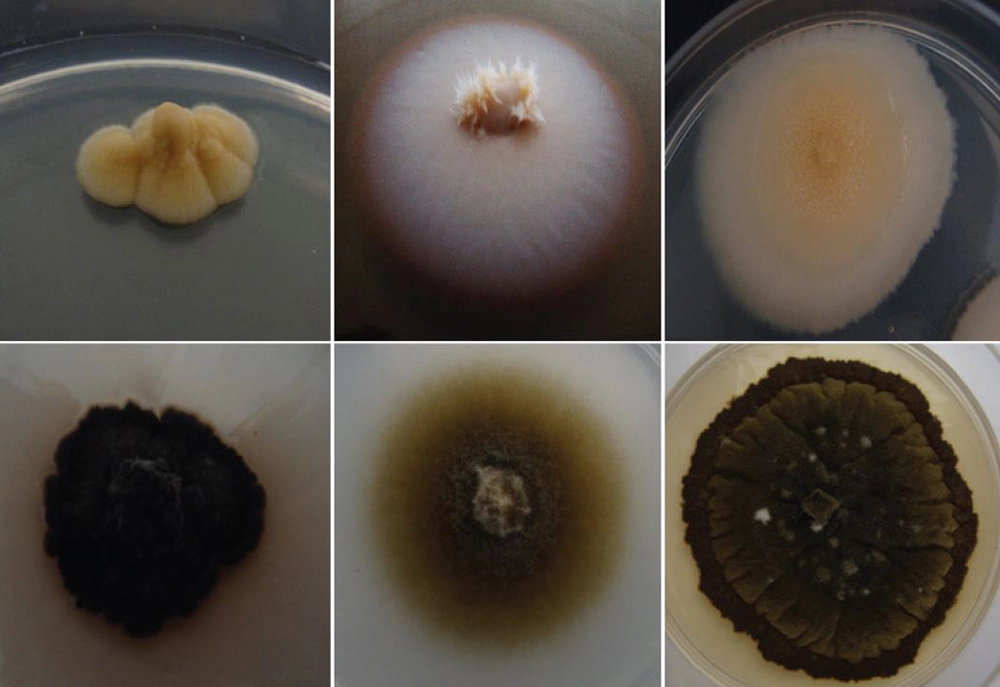
Scientists recently surveyed the Coimbra cathedral for signs of deterioration and made a startling discovery: They found a type of black fungus that was unknown to science, describing it as a new family, genus and species. [Microscopic Worlds Gallery: Fascinating Fungi]
Slow-growing black fungi are considered to be especially destructive to stone monuments because they sink their hyphae — branching tendrils — deep inside, leading to cracks and fissures, the researchers reported in a new study, published online Jan. 28 in the journal MycoKeys.
Black fungi can further damage stone with the production of polysaccharides, which cause corrosion.
Once black fungi take hold somewhere, they can be very difficult to dislodge. These hardy organisms have a high tolerance for drought, solar and ultraviolet radiation, and extreme temperatures, according to the study. Their destructive power and resistance to corrective restoration treatments make black fungi "one of the major challenges" for experts working to preserve culturally important objects and buildings, the researchers reported.
In the cathedral's Santa Maria chapel (top) scientists retrieved black fungus from carved artwork (bottom).
(Image credit: Miguel Mesquita)
They collected fungus samples from a deteriorated limestone carving in the cathedral's Santa Maria chapel, evaluating the fungus's physical features, its DNA, and its tolerance of extreme heat, salt and acid. Analysis revealed a new lineage of black fungus, and the study authors dubbed it Aeminium ludgeri: "Aeminium" is the old Latin name of Coimbria, and "ludgeri" references a deceased colleague, Ludgero Avelar, a researcher with the Centre for Functional Ecology at the University of Coimbra.
Sign up for the Live Science daily newsletter now
Get the world’s most fascinating discoveries delivered straight to your inbox.
The fungus may have traveled to the Coimbra cathedral during its construction, in limestone brought from two nearby quarries, the scientists reported. And while the cathedral is currently the only known host to this black fungus, it might be native to limestone quarries in the region, they added.
"Additional sampling may further expand the full geographical and ecological spectrum of this fungus," the researchers wrote in the study.
Mindy Weisberger is a science journalist and author of "Rise of the Zombie Bugs: The Surprising Science of Parasitic Mind-Control" (Hopkins Press). She formerly edited for Scholastic and was a channel editor and senior writer for Live Science. She has reported on general science, covering climate change, paleontology, biology and space. Mindy studied film at Columbia University; prior to LS, she produced, wrote and directed media for the American Museum of Natural History in NYC. Her videos about dinosaurs, astrophysics, biodiversity and evolution appear in museums and science centers worldwide, earning awards such as the CINE Golden Eagle and the Communicator Award of Excellence. Her writing has also appeared in Scientific American, The Washington Post, How It Works Magazine and CNN.