















Every NASA Mission Should Be Looking for Alien Life, Scientists Say

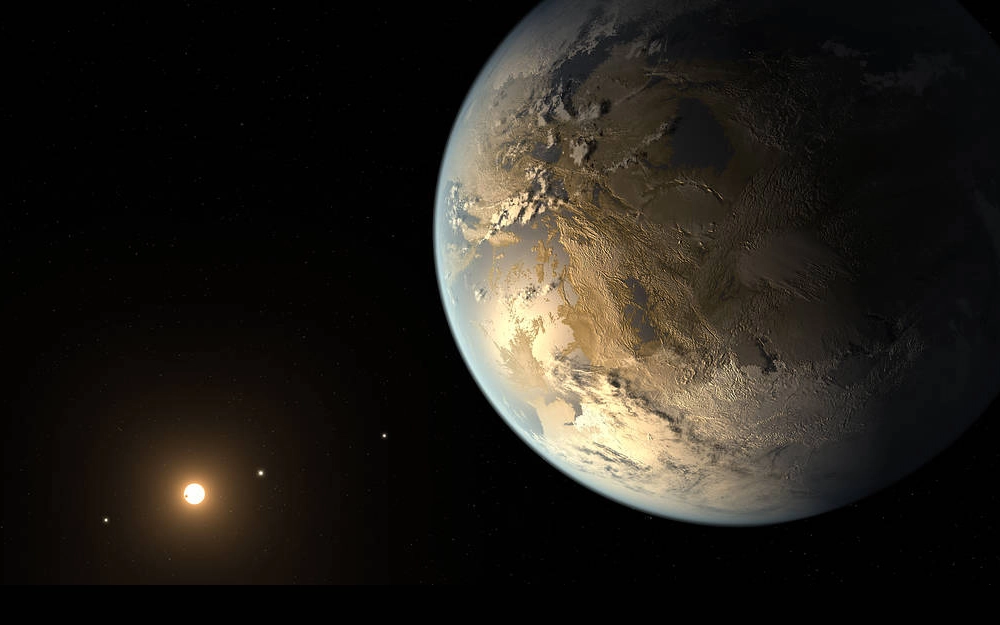
Searching for signs of alien life should be part of every future NASA mission, researchers wrote in a new report.
Authored by 17 scientists, the congressionally mandated report was unveiled on Oct. 10 by the National Academies of Sciences, Engineering, and Medicine (NASEM). It emphasized the importance of including astrobiology — the study of how life originated on Earth and how it might evolve elsewhere in the universe — in every phase of all NASA missions destined for space, "from inception and conceptualization, to planning, to development, and to operations."
Why now? In recent years, astrophysicists have detected thousands of exoplanets, and biologists are uncovering new insights into the complexity and diversity of life on Earth, the authors said in a briefing. These discoveries bolster the chance that life could exist on other worlds, and therefore all space exploration missions should incorporate technology to find traces of alien organisms, according to the report. [9 Strange, Scientific Excuses for Why Humans Haven't Found Aliens Yet]
Our present view of the universe is more crammed with planets than ever before; the 2,300 confirmed exoplanets discovered by NASA's Kepler mission led to estimates that six out of every 10 stars could host Earthlike planets, Alan Boss, an astronomer with the Carnegie Institution for Science in Washington, D.C. and a co-author of the report, said in the briefing.
The sheer number of known exoplanets offers exciting opportunities for finding biosignatures — chemical markers that indicate signs of life, Boss explained.
Astrobiology represents a range of scientific disciplines, such as physics, chemistry, biology, astronomy and planetary science, according to the report. Individually and together, these areas of expertise help to piece together the puzzle of how life could emerge and evolve on worlds other than Earth, and recent advances in the field — particularly in the last three years — demand a new strategy that will fortify astrobiology's role in NASA missions, NASEM representatives said in a statement.
In the report, scientists recommended that NASA accelerate the development of technologies to detect microscopic organisms, citing the current lack of a single "flight-ready instrument" that can travel to a distant world and measure the composition of its elements, minerals and organic matter.
Get the world’s most fascinating discoveries delivered straight to your inbox.
The report also suggested that direct imaging systems that suppress starlight should be used outside our solar system, to improve detection of biosignatures from planets that might orbit those stars. NASA could also plan more missions that peer under the surface of exoplanets — rocky, icy or ocean worlds — to find subterranean alien life, according to the report.
However, efforts to locate our extraterrestrial neighbors, either in our own solar system or light-years away, will take more than technology alone. Fostering collaboration and cooperation with international space agencies, private individuals and philanthropic institutions will be just as important to NASA as developing and implementing technological resources, and such partnerships "have the potential to advance the search for life rapidly," scientists wrote in the report.
Originally published on Live Science.

Mindy Weisberger is a science journalist and author of "Rise of the Zombie Bugs: The Surprising Science of Parasitic Mind-Control" (Hopkins Press). She formerly edited for Scholastic and was a channel editor and senior writer for Live Science. She has reported on general science, covering climate change, paleontology, biology and space. Mindy studied film at Columbia University; prior to LS, she produced, wrote and directed media for the American Museum of Natural History in NYC. Her videos about dinosaurs, astrophysics, biodiversity and evolution appear in museums and science centers worldwide, earning awards such as the CINE Golden Eagle and the Communicator Award of Excellence. Her writing has also appeared in Scientific American, The Washington Post, How It Works Magazine and CNN.