













A New 'Brown Tide' Could Make Florida's Dangerous Red Tide Worse

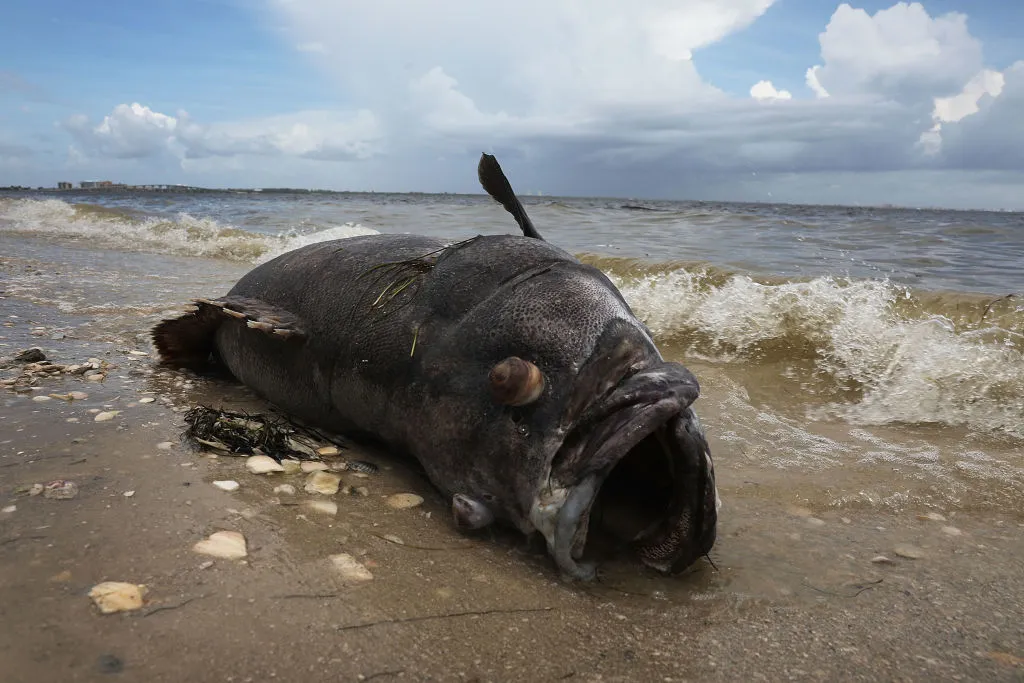
The beaches of southwest Florida are once again graveyards for marine life, thanks to a deadly "red tide" algal bloom floating just beneath the surface of the water offshore. The algae bloom has gone on way longer than usual, since November 2017. And it looks like things are going to get worse before they get better, as a separate bloom — this one called a "brown tide" — appears to be on track to intermingle with the ride tide and feed it, according to news reports.
Brown tides are caused by a cyanobacterium called Trichodesmium that derives its energy from the sun, just like Karenia brevis, the alga that causes toxic red tides. While Trichodesmium can produce toxins on its own, the Miami Herald reported that the real danger is that the brown tide could become a food source for the red-tide alga if they mix. [What Is a Red Tide?]
Unlike K. brevis, which lives underwater, Trichodesmium floats on the water's surface and sucks nitrogen out of the air. If the blooms cross, the Herald reported, dying Trichodesmium could serve as a source of nitrogen for the K. brevis bloom, extending its lifespan.
Currently, the ongoing red tide threatens wildlife and humans along about 145 miles (233 kilometers) of coastline between Pinellas and Collier counties in southwest Florida, according to the Florida Fish and Wildlife Conservation Commission. The offshore brown tide is not yet known to have mixed with the red tide.
In addition to killing off marine life, red tides pose a threat to humans. Florida's Mote Marine Laboratory & Aquarium states that K. brevis can blow inland when a red tide is present offshore, causing coughing, sneezing, tearing and an itchy throat. People with asthma or other respiratory conditions should avoid red-tide areas, the Mote Marine Laboratory warned.
Originally published on Live Science.
Get the world’s most fascinating discoveries delivered straight to your inbox.
