













What Forehead Wrinkles Might Tell You About Your Heart Health

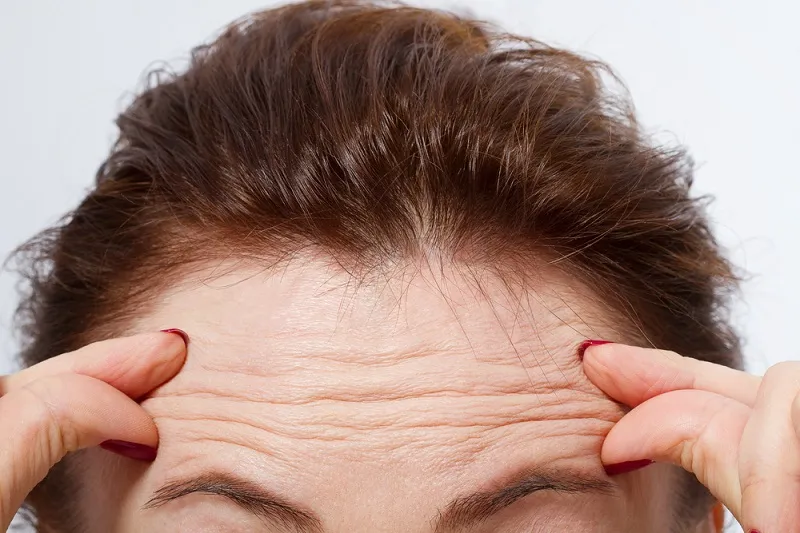
No one likes getting wrinkles, but a new study suggests that some wrinkles may be more than just a sign of aging — they might signal heart disease risk.
The study, from researchers in France, found that people with numerous, deep forehead wrinkles — more than is typical for their age — were more likely to die from heart disease, compared with those without forehead wrinkles.
The study authors said that, if the findings are confirmed with additional research, looking at forehead wrinkles could be an easy, low-cost way to help identify people at high risk for heart disease.
"You can't see or feel risk factors like high cholesterol or hypertension," lead study author Yolande Esquirol, an associate professor of occupational health at the Centre Hospitalier Universitaire de Toulouse in France, said in a statement. "We explored forehead wrinkles as a marker because it's so simple and visual. Just looking at a person's face could sound an alarm; then we could give advice to lower [the] risk" of heart disease," said Esquirol, who presented the findings in Munich yesterday (Aug. 26) at ESC Congress 2018, the annual conference of the European Society of Cardiology.
However, the study found only an association between forehead wrinkles and an increased risk of heart disease; and so the findings don't mean that wrinkles definitely indicate heart disease.
Moreover, the researchers noted that looking at forehead wrinkles wouldn't take the place of assessing people for classic risk factors, such as high blood pressure and cholesterol levels. But if a person has a lot of deep forehead wrinkles, it could raise a red flag, they said. "Forehead wrinkles may be a marker of atherosclerosis," or hardening of the arteries due to plaque buildup, Esquirol said. [9 New Ways to Keep Your Heart Healthy]
The exact reason for the link is unknown, but "some factors that may lead to premature aging of the skin can contribute to premature aging of the arteries" and atherosclerosis, said Dr. Gregg Fonarow, a professor of cardiovascular medicine at the University of California, Los Angeles, who was not involved with the study.
Get the world’s most fascinating discoveries delivered straight to your inbox.
Previous studies have found a link between other visible features — including male-pattern baldness, earlobe creases and xanthelasma (pockets of cholesterol under the skin) — and heart disease risk.
In the new study, the researchers analyzed data from more than 3,200 French adults who were ages 32, 42, 52 and 62 at the start of the study. The participants underwent an exam in which doctors assessed their forehead wrinkles and assigned the participants a score based on the number and depth of the wrinkles. A score of zero meant no wrinkles, while a score of 3 meant "numerous deep wrinkles."
The participants were followed for about 20 years, during which 233 of the participants died of various causes.
People with a wrinkle score of 1 were five times more likely to die from heart disease, and people with a wrinkle score of 2 or 3 were nearly 10 times more likely to die from heart disease, compared with people with a wrinkle score of 0.
The findings held even after the researchers took into account factors that could affect people's risk of death from heart disease, including their age, gender, education level, smoking status, blood pressure, heart rate, lipid levels and whether they had diabetes.
The new findings "suggest that the presence or absence of forehead wrinkles may provide some insight into future [risk of early death], and … could potentially be considered more than skin-deep," Fonarow told Live Science.
Still, Fonarow said that future studies are needed to confirm the findings and to evaluate the link in broader populations of adults.
The study has not yet been published in a peer-reviewed journal.
Original article on Live Science.

Rachael is a Live Science contributor, and was a former channel editor and senior writer for Live Science between 2010 and 2022. She has a master's degree in journalism from New York University's Science, Health and Environmental Reporting Program. She also holds a B.S. in molecular biology and an M.S. in biology from the University of California, San Diego. Her work has appeared in Scienceline, The Washington Post and Scientific American.