














Inducing Labor at 39 Weeks Lowers Risk of C-Section

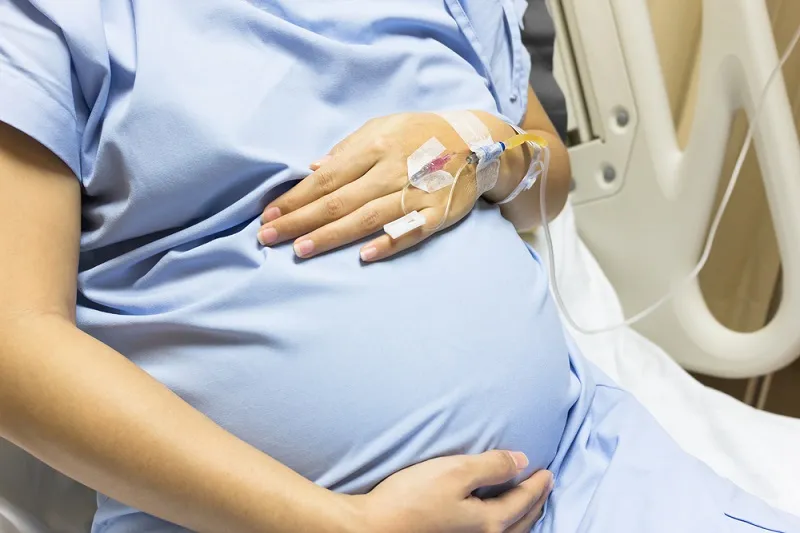
Pregnant woman who reach full term have long been advised to "wait it out" until 41 weeks before doctors will recommend inducing labor. That's because inducing labor earlier was thought to increase the risk of delivery by Caesarean section. But now, a new study suggests otherwise.
The study involved more than 6,000 U.S. women with healthy pregnancies who were randomly assigned to either be induced during their 39th week of pregnancy or to wait for longer to go into labor.
The results surprised the researchers: Women who were induced at 39 weeks were less likely to need a C-section than women who waited for their labor to start naturally. What's more, the risk of major complications such as infection, hemorrhage and stillbirth, was about the same for both groups.
Related: Are You Pregnant? 10 Early Signs of Pregnancy
The findings suggest that it's now "reasonable" for doctors to offer labor induction at 39 weeks to women who are similar to those in the study — that is, women who are healthy, first-time mothers with low-risks pregnancies, according to the American College of Obstetricians and Gynecologists. But this isn't a blanket recommendation for induction at 39 weeks. Rather, it means that labor induction at 39 weeks may be an option for certain women who wish to be induced then.
"I don't think the conclusion of this paper should be we should be recommending or encouraging induction at 39 weeks," Dr. Errol Norwitz, chair of obstetrics and gynecology at Tufts University School of Medicine, who was not involved with the study, told The Washington Post. "But if someone comes to you and desires to be induced, it is a conversation we should now be having," he said.
The study was published online Wednesday (Aug. 8) in The New England Journal of Medicine.
Get the world’s most fascinating discoveries delivered straight to your inbox.
Original article on Live Science.

Rachael is a Live Science contributor, and was a former channel editor and senior writer for Live Science between 2010 and 2022. She has a master's degree in journalism from New York University's Science, Health and Environmental Reporting Program. She also holds a B.S. in molecular biology and an M.S. in biology from the University of California, San Diego. Her work has appeared in Scienceline, The Washington Post and Scientific American.