














The New York Times May Have Solved the Biggest Environmental Mystery in Decades

The New York Times thinks it's found the culprit of one of the strangest scientific whodunits in recent memory: the reappearance of illegal, ozone-destroying chlorofluorocarbons (CFCs) in the atmosphere. According to the Times, the surge in dangerous CFC-11 reported in May might be largely or entirely the result of foam-producing factories in the town of Xingfu, China, that operate with little oversight.
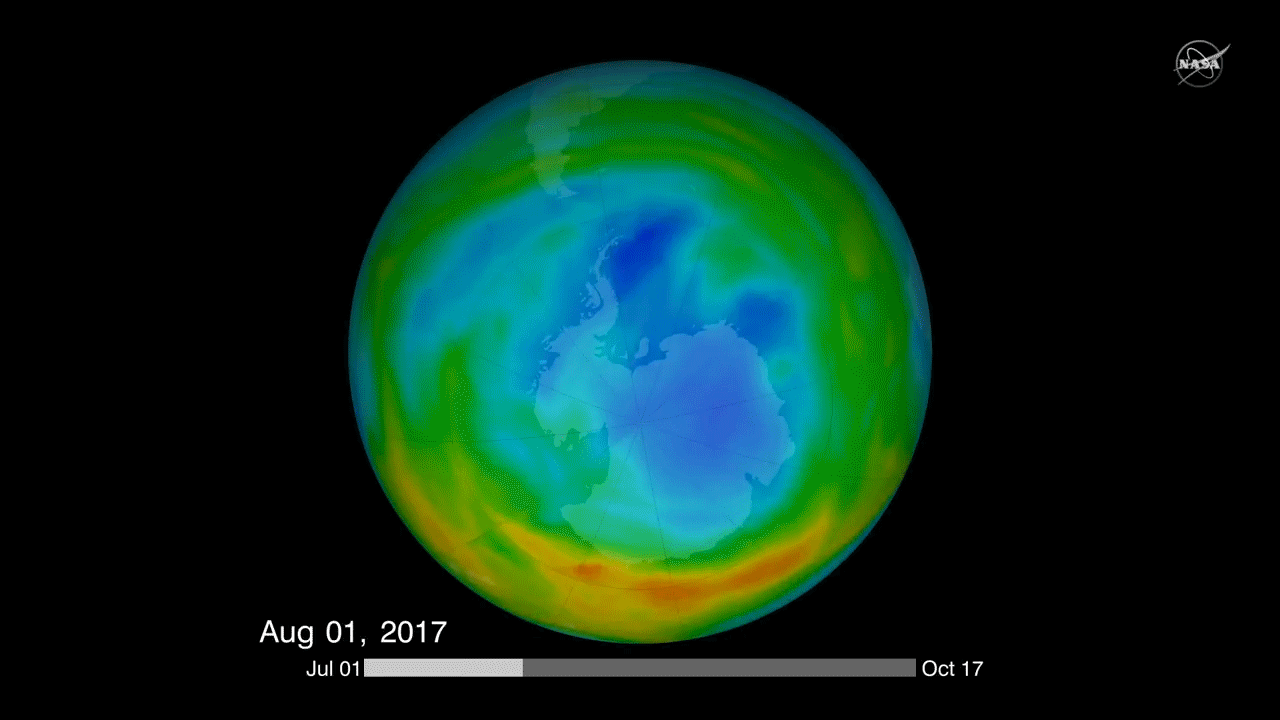
CFCs have been illegal around the world since countries signed on to the Montreal Protocol in 1987. Scientists had shown that CFCs were chemically interacting with and thinning the global ozone layer, which protects the planet's surface from dangerous ultraviolet radiation. And the protocol has largely been a success: CFC production around the world has all but stopped, and the ozone layer is well on its way toward repairing itself. [Top 10 Emerging Environmental Technologies]
But a bizarre, unexpected study published in the journal Nature in May showed that levels of a single kind of CFC, CFC-11, have been increasing steadily in the atmosphere in recent years. The Times investigation, which has not been published in a peer-reviewed journal, found that many factories in Xingfu continue to produce CFCs. In some cases, factory owners admitted to using the chemical, and one factory owner said he was unaware that CFCs were dangerous to the atmosphere or illegal. As Live Science previously reported, there are cheaper alternatives to CFCs, which was part of what made the whodunit so baffling. But the Times reported that some factory owners in Xingfu simply did not know those alternatives existed.
While the scale of CFC-11 production in China appears significant, one expert expressed skepticism in the Times report that Xingfu's factories are new or large enough to entirely account for the recent uptick. In either case, the production is unlikely to go on for long. The Times reported that Chinese environmental regulators are cracking down on CFC production in the area — in one case, entering a factory just minutes after the Times completed its interview.
Read the full New York Times report on CFC production in Xingfu here.
Get the world’s most fascinating discoveries delivered straight to your inbox.
