















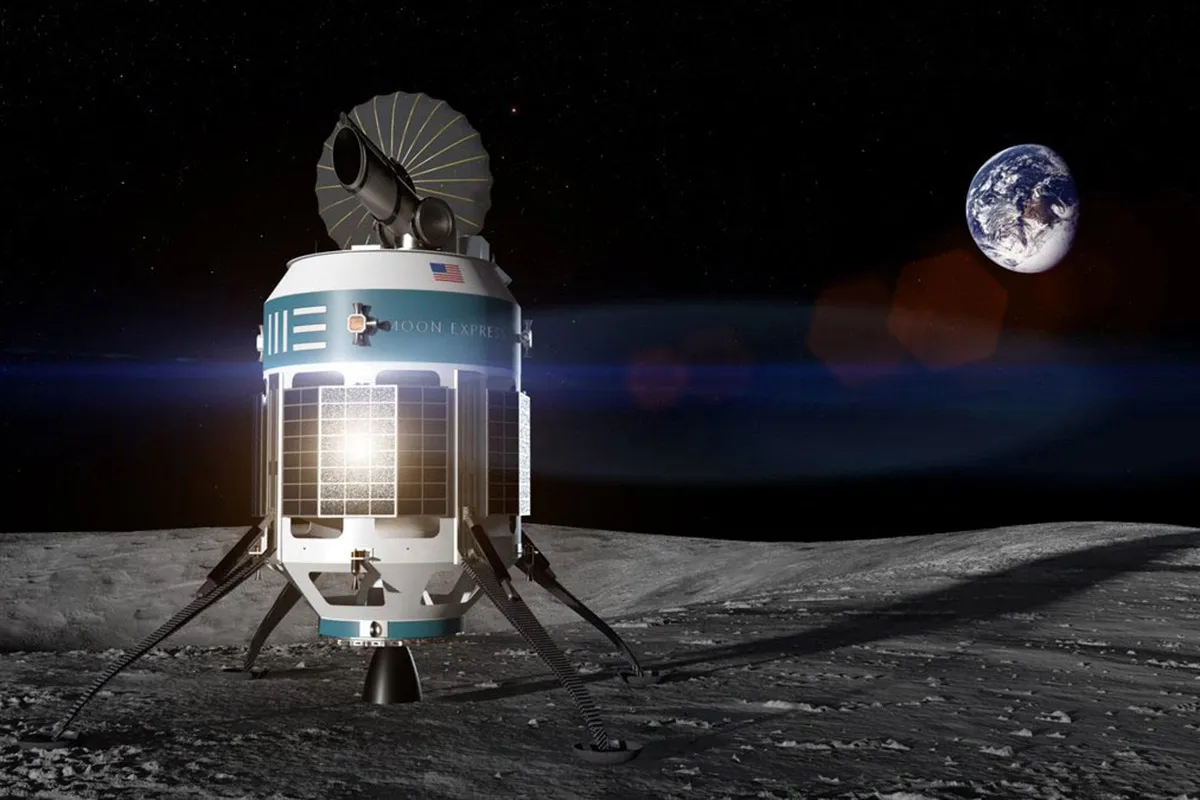
A private race to the moon is back on, without a title sponsor or a big cash prize.
Earlier this year, Google ended its decade-long sponsorship of the Google Lunar X Prize, a $30 million moon race that sought to spur commercial spaceflight and exploration. But Thursday (April 5), the nonprofit X Prize Foundation announced that it's relaunching the race as a non-cash competition (for now), with contest parameters to be worked out over the next few months.
"We are extraordinarily grateful to Google for funding the $30 million Google Lunar X Prize between September 2007 and March 31, 2018. While that competition is now over, there are at least five teams with launch contracts that hope to land on the lunar surface in the next two years," Peter Diamandis, X Prize founder and executive chairman, said in a statement. [Google Lunar X Prize: The Private Moon Race Teams (Images)]
"Because of this tremendous progress, and near-term potential, X Prize is now looking for our next visionary title sponsor who wants to put their logo on these teams and on the lunar surface," Diamandis added.
A new title sponsor would be responsible for funding contingent cash purses, X Prize representatives said.
The original Google Lunar X Prize called for privately funded teams to land a robotic spacecraft on the moon, move it at least 1,640 feet (500 meters) on the lunar surface and beam high-definition imagery back to Earth. The first team to do this would win the $20 million grand prize, and the second would snag $5 million. An addition $5 million was available for various special accomplishments, bringing the total purse to $30 million.
Over the years, more than two dozen teams threw their hats into the ring. But none of them ended up meeting the Google Lunar X Prize's shifting deadline. (The deadline was originally the end of 2012, but it was pushed back several times, finally to March 31 of this year.)
Get the world’s most fascinating discoveries delivered straight to your inbox.
Only five teams remained in the competition to the very end — Florida-based Moon Express, Team Hakuto from Japan, Israel-based SpaceIL, India's Team Indus and international group Synergy Moon. As Diamandis mentioned, these five still plan to go through with their lunar missions, generally to lay the foundation for commercial operations based on moon mining and/or transportation services to the lunar surface.
"We applaud X Prize's decision to continue the Lunar X Prize, with or without a title sponsor," Bob Richards, Moon Express founder and CEO, said in the same statement. "While we plan to win this moon race and are committed to carrying the Lunar X Prize logo, the real opportunity is in opening the lunar frontier and the multibillion dollar industry that follows."
Follow Mike Wall on Twitter @michaeldwall and Google+. Follow us @Spacedotcom, Facebook or Google+. Originally published on Space.com.
