













What Is Novichok, the Poison That Nearly Killed a Russian Ex-Spy?

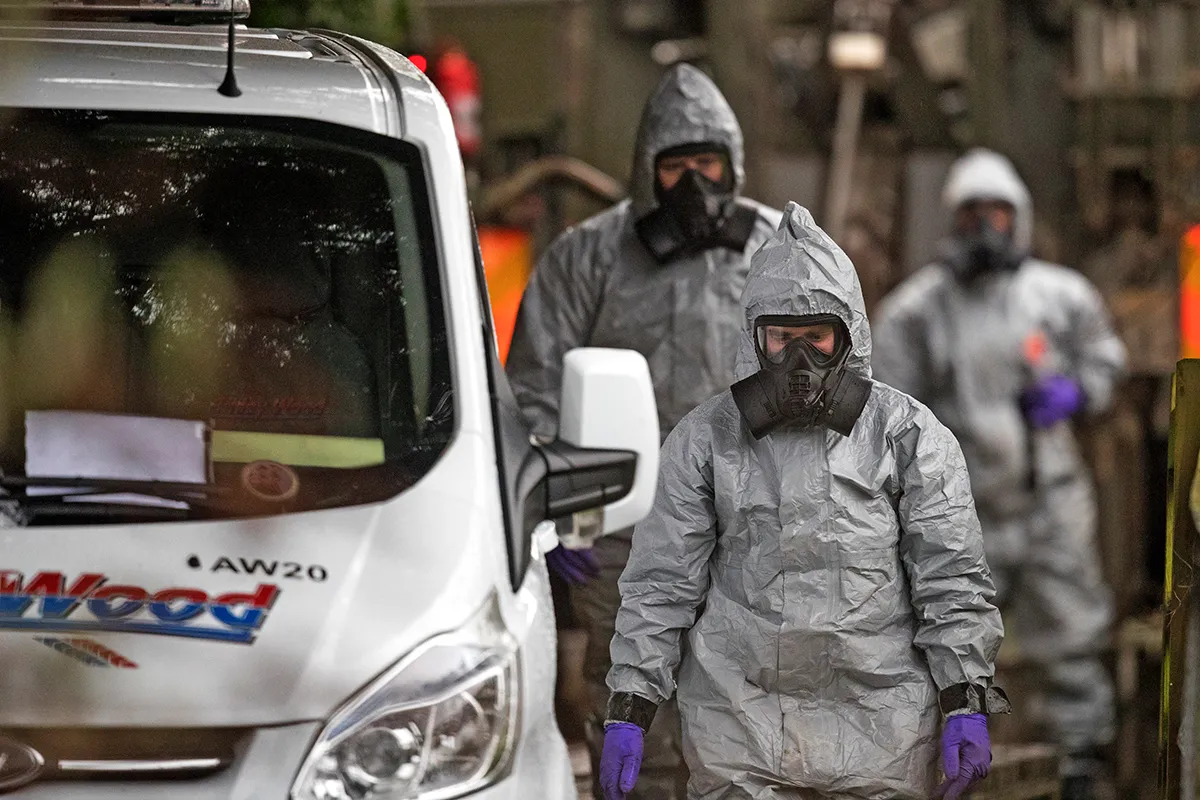
A Soviet-era poison called Novichok was used to poison a Russian ex-spy and his daughter last week in England, U.K. Prime Minister Theresa May told Parliament today (March 12).
This announcement shows that U.K. authorities were right to suspect that a type of nerve agent had poisoned the former spy, Sergei Skripal, 66, and his daughter Yulia Skripal, 33, who were found stiff and unconscious on a park bench in Salisbury, England, on March 4. Both Sergei Skripal and Yulia Skripal are critically ill and in intensive care.
But what is Novichok, and how does it affect humans? [5 Lethal Chemical Warfare Agents]
Novichok, which means "newcomer" in Russian, is a Soviet-era class of nerve agents that was created in the 1970s and 1980s as an attempt to get around the Chemical Weapons Treaty, according to "Responding to Terrorism: A Medical Handbook," published in 2010. That's because the treaty banned chemical weapons that have a certain chemical structure, and Novichok has a different structure.
Despite this structural difference, Novichok agents act like other nerve agents by binding to and inactivating cholinesterase, an enzyme that the nervous system uses to communicate with muscles.
"The reason you die from these [nerve agents] is very simple," said Dr. Lewis Nelson, chairman of emergency medicine at Rutgers New Jersey Medical School, who is not involved with the Skripals' treatment. "If your muscles don't work, you can't breathe, and if you can't breathe, you eventually die."
Like other nerve agents, Novichok causes a range of symptoms. Victims can develop pinpoint-size pupils, digestive problems and excess salivation and tears, Nelson said. Typically, muscle spasms and seizures occur, and the heart stops beating.
Get the world’s most fascinating discoveries delivered straight to your inbox.
Novichok agents can take the form of an ultrafine powder, according to the handbook. The poison is made when two separate, nontoxic components are mixed into an active nerve agent.
If Novichok agents are inhaled, symptoms can occur in 30 seconds to 2 minutes, the handbook says.
In addition, a little bit of Novichok can do a lot of damage; it's five to eight times more potent than VX nerve agent, according to the handbook. This means that it takes less Novichok to cause the same amount of harm that VX does, Nelson said.
Because so little of it is needed to cause harm, Novichok agents are challenging to detect in victims. But toxicologists can probably find them if they know what they're looking for, Nelson said. "There are ways around it by concentrating the sample," he told Live Science.
If a person is exposed to Novichok agents, they should be immediately connected to life support and decontaminated — that is, their clothes should be removed and their skin washed with soap and water. A number of antidotes — including atropine, pralidoxime and diazepam — can be lifesaving, Nelson said.
But even these treatments don't guarantee recovery. "Novichok agents are reported to produce more permanent injury, even following appropriate nerve agent antidote treatment," the handbook says.
Original article on Live Science.

Laura is the managing editor at Live Science. She also runs the archaeology section and the Life's Little Mysteries series. Her work has appeared in The New York Times, Scholastic, Popular Science and Spectrum, a site on autism research. She has won multiple awards from the Society of Professional Journalists and the Washington Newspaper Publishers Association for her reporting at a weekly newspaper near Seattle. Laura holds a bachelor's degree in English literature and psychology from Washington University in St. Louis and a master's degree in science writing from NYU.