














Arizona Woman Wakes Up with British Accent

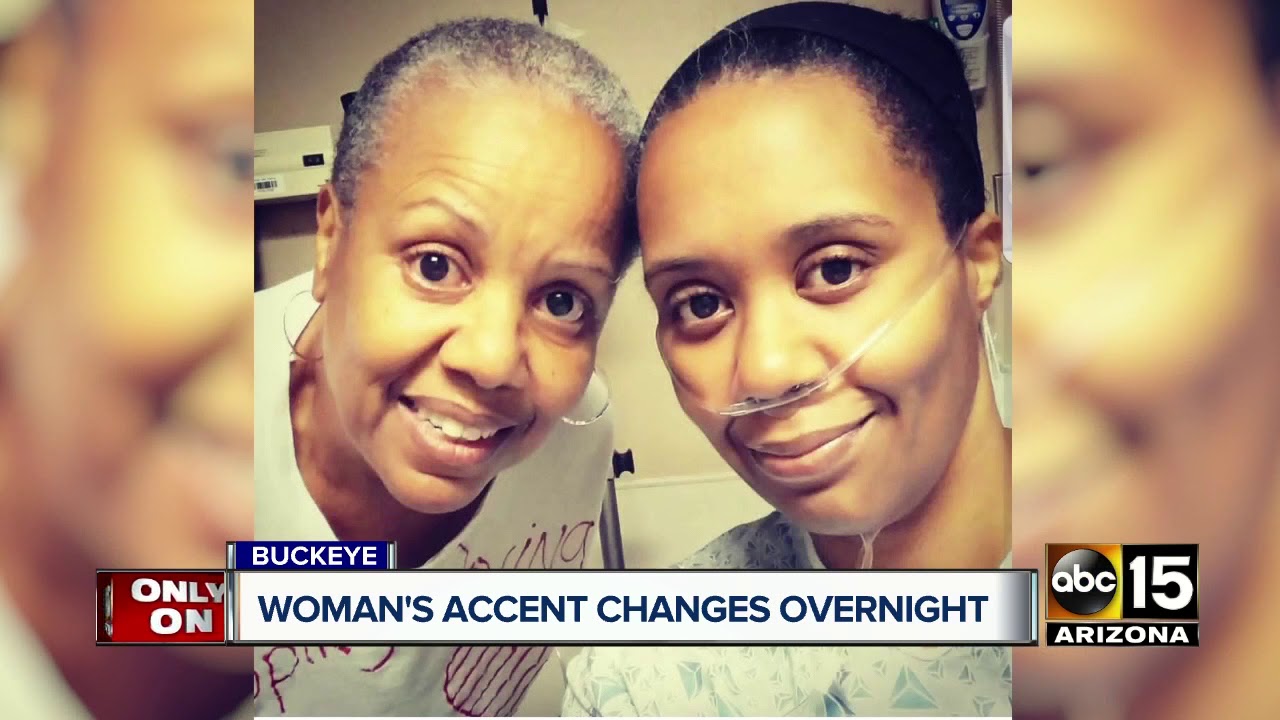
An Arizona woman woke up speaking with a British accent, even though she's lived in the U.S. all her life, according to news reports.
The woman, Michelle Myers, said that in 2015, she went to bed with a "blinding headache" and woke up sounding British, according to ABC affiliate KNXV. Her across-the-pond accent has remained for the past two years.
"Everybody only sees or hears Mary Poppins" when they listen to her speak, Myers told KNXV.
Previously, Myers said she has woken up speaking in Irish and Australian accents, but on both of those occasions, the accents lasted for only a week.
Myers has been diagnosed with foreign accent syndrome (FAS), a disorder in which a person experiences a sudden change to their speech so that they sound like they are speaking in a foreign accent, according to The University of Texas at Dallas.
The condition is most often caused by a stroke or traumatic brain injury. Although people with FAS have intelligible speech, their manner of speaking may be altered in terms of timing, intonation or tongue placement, so they sound foreign, UT Dallas says. For example, they may distort their pronunciation of vowels or substitute vowels (so "yeah" becomes "yah," for example).
It's not clear whether Myers has experienced a stroke or other brain damage. But she also has a condition called Ehlers-Danlos syndrome, which affects connective tissue in the body, and that condition can result in loose joints, stretchy skin, easy bruising, as well as the rupturing of blood vessels, according to the U.S. National Library of Medicine.
Get the world’s most fascinating discoveries delivered straight to your inbox.
Foreign accent syndrome is rare, with only about 60 cases reported within the past century, according to a 2011 study. In 2010, a woman in Virginia reportedly spoke with a Russian accent after she fell down the stairs and hit her head, according to The Washington Post. In another case, a woman from Ontario, Canada, started speaking in Maritime (Atlantic) Canadian English after she had a stroke.
Original article on Live Science.

Rachael is a Live Science contributor, and was a former channel editor and senior writer for Live Science between 2010 and 2022. She has a master's degree in journalism from New York University's Science, Health and Environmental Reporting Program. She also holds a B.S. in molecular biology and an M.S. in biology from the University of California, San Diego. Her work has appeared in Scienceline, The Washington Post and Scientific American.