













New Sensor to Boost Quality of Cell-Phone Cameras
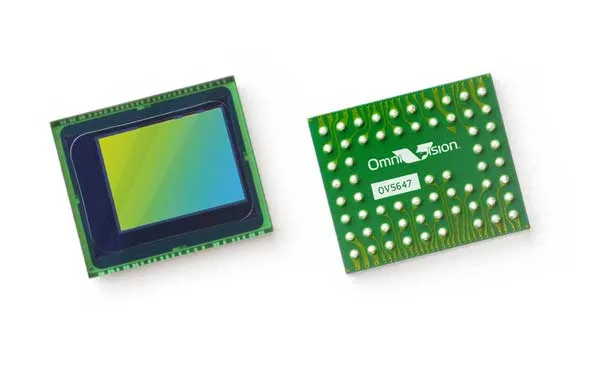
A new cell-phone camera sensor from OmniVision Technologies could make images and videos from your next cell phone look like they were taken with a high-end digital camera.
The image sensor can capture images at five million pixels, or five megapixels, and will also be capable of recording video at full high definition (HD) 1080p – the maximum resolution of today’s high-end HDTVs – at 30 frames per second.
At lower 720p resolution, the sensor can record video at 60 frames per second and its sensitivity to light doubles, so video shot can be shot in lower light.
“Five megapixels is really a magical resolution if you want to do 720p [video],” Per Rosdahl, OmniVision Technologies’ director of marketing told TechNewsDaily.
For cheap phones, too
But HD recording isn’t the only advantage OmniVision’s new sensor has over its predecessors. After all, many high-end phones already on the market sport five megapixel cameras.
The new sensor, at just 8.5mm square, and 5mm tall, is designed to be compatible with smaller, thinner, less-expensive mainstream phones, rather than the typically bulkier, more-expensive high-end smartphones.
Get the world’s most fascinating discoveries delivered straight to your inbox.
No newcomer to the digital image sensor scene, OmniVision Technologies, founded in 1995, develops digital imaging technologies currently used in notebooks, webcams, surveillance, and digital cameras. Rosdahl says the company’s imaging products are inside roughly a quarter of the world’s cell phones.
Other features of the new sensor include the company’s backside illumination (BSI) technology, which inverts the sensor so that light can be collected from the back, rather than the front, offering a more direct path for light to travel to the sensor.
OmniVision says this leads to greater light sensitivity and better color reproduction compared to competing technologies.
‘Raw’ format
The sensor will also be able to shoot in a format called Raw, which has typically been a feature found only in expensive, high-end digital single-lens reflex (DSLR) cameras.
Think of a Raw file as a digital negative. Most cameras and camera phones compress and process an image automatically, as soon as it’s taken, directly within the camera or the phone, thus deleting some of the image data that comes directly from the sensor.
But with Raw images, the user gets to control how the image is processed and compressed. They can even save the image unprocessed and export it to a computer, where a much faster processor, aided by sophisticated software, can do a better job of compressing and processing the file, theoretically resulting in a better image.
It’s doubtful the average cell phone user will always want to use this advanced feature, so the company says the sensor will have some built-in image processing capabilities.
“This is a Raw sensor, but we still have some imaging process features on it,” said Rosdahl. “[It] has both defect pixel correction, and lens correction on the sensor.”
Rosdahl says lens correction is necessary to compensate for the difficulties in getting correct lighting at the edges of a picture, due to the small size of the sensor.
The new sensor is currently being sent to phone manufacturers for testing, and is slated to go into mass production July.
It should make its way into cell phones before the end of the year, according to Rosdahl.