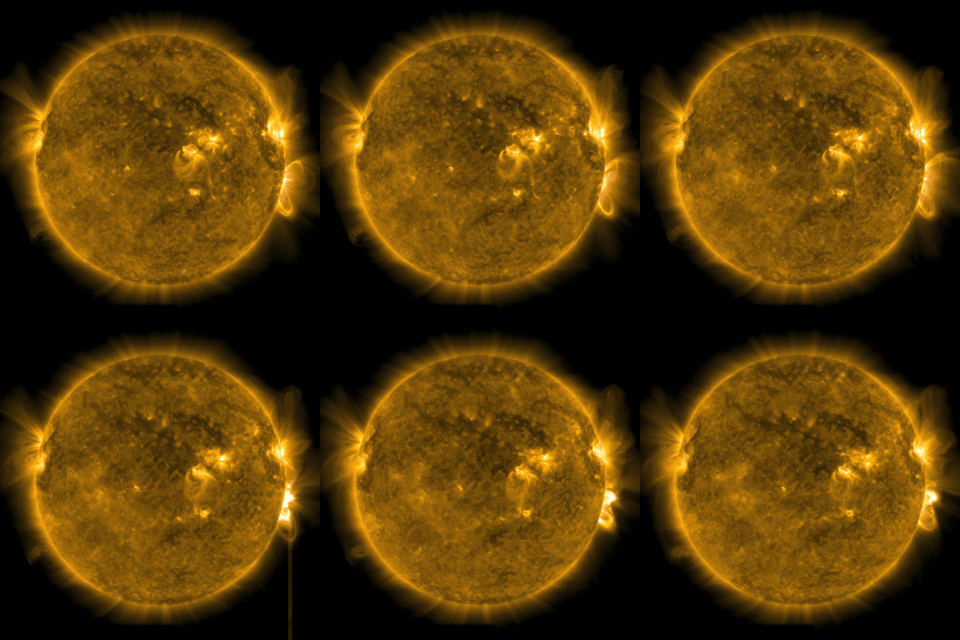
The flare, which peaked at 12:06 EDT (1606 GMT), covered North and South America in high-energy light. The National Oceanic and Atmospheric Administration's Space Weather Prediction Center (SWPC) released a statement that warned of strong, high-frequency radio blackouts and navigation-system disruption, potentially lasting up to an hour.
NASA's Solar Dynamics Observatory captured the Sunday Sept 10 X-class solar flare.
(Image credit: NASA/SDO/Goddard)
There are three categories of solar flares, and Sunday's was the highest classification: an "X" event. Two of the other recent flares were also X-class, including Wednesday's (Sept. 6) X9.3 flare, the strongest solar blast in 12 years.
The SWPC's warning also asked astronauts aboard the International Space Station to take special precautions, because they're above most of Earth's atmosphere and therefore are at risk of exposure to harmful radiation. The warning discouraged astronauts from performing spacewalks just after the flare, for example.
Like many powerful flares, Sunday's was accompanied by a coronal mass ejection (CME), a huge cloud of superheated solar plasma that races through space at millions of miles per hour. AR 2673 isn't pointing directly at Earth anymore, but this CME may still give the planet a glancing blow, potentially supercharging the northern lights on Wednesday night (Sept. 13), according to Spaceweather.com.
The solar activity seen this month comes as a bit of a surprise, as the sun is currently entering solar minimum, a quiet portion of the star's roughly 11-year cycle of change.
A graph released by Space Weather Prediction Center to advise the public on the side effects of the massive Sept. 10, 2017, solar flare. It appeared at 12:06 EDT (1606 UTC), from an area of the sun known as region 2673 that is turning away from Earth.