














Baby's Lead Poisoning Caused by 'Homeopathic Magnetic' Bracelet

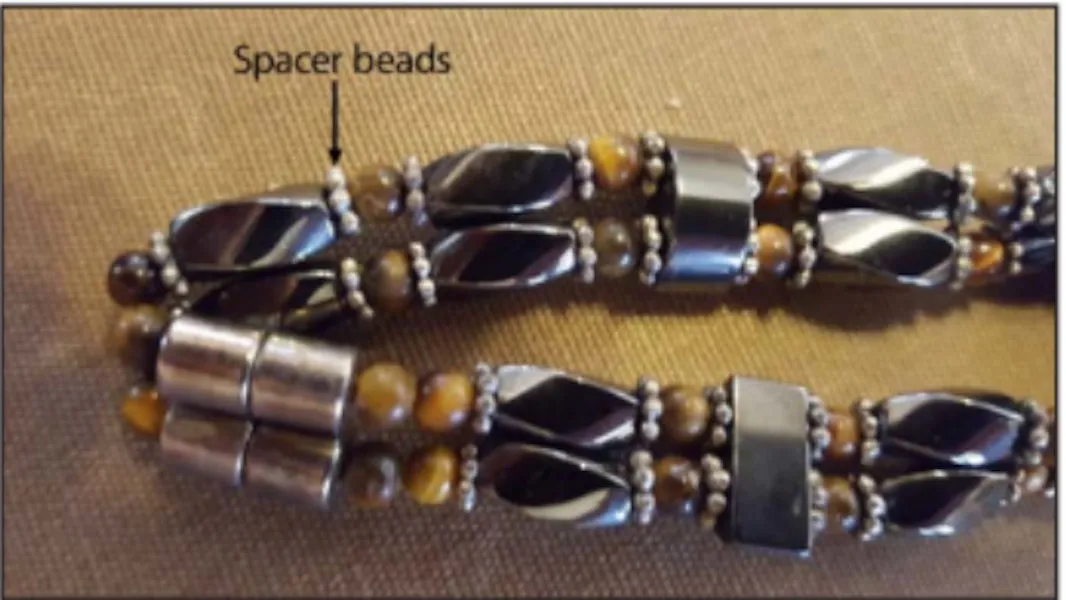
An infant girl in Connecticut developed lead poisoning after wearing — and chewing on — a bracelet made with lead beads, according to a new report of the child's case.
Doctors discovered that the 9-month-old had abnormally high blood lead levels during a routine checkup. Her blood lead level was 41 micrograms per deciliter (ug/dL); anything over 5 ug/dL is considered abnormal, according to the report, published today (Aug. 31) by the Centers for Disease Control and Prevention (CDC).
Health investigators visited the infant's home, and found two windows with peeling lead-based paint. However, the infant wouldn't have been able to reach these areas, according to the report. In addition, the girl's three siblings, who were between ages 3 and 5, had blood lead levels of less than 3 ug/dL, suggesting that the peeling paint wasn't the source of the lead poisoning. [9 Weird Ways Kids Can Get Hurt]
Instead, investigators focused on a handmade bracelet the parents had given the infant. The bracelet was a "homeopathic magnetic hematite healing bracelet" that the parents purchased from an artisan at a local fair. The parents had given the infant the bracelet for "teething-related discomfort," the report said. Sometimes the infant chewed on the bracelet, the report added. (Despite a lack of scientific evidence, some people purport that magnets have healing properties if placed close to the body.)
When investigators tested the beads on the bracelet, they found that some of the beads had extremely high levels of lead: 17,000 parts per million (ppm). The amount of lead that's considered safe for children's products is 90 ppm or 100 ppm, depending on the type of product, according to the U.S. Consumer Product Safety Commission (CPSC).
In general, the most common way children get lead poisoning is by ingesting something that contains lead. In 2003 and 2006, for example, there were several cases of severe lead poisoning and death linked to lead-containing jewelry and charms marketed to children, the report said. After these instances, the CPSC set limits on the amount of lead allowed in products marketed to kids, and each year, there are recalls of children's jewelry that exceed those limits. However, the limits do not apply to products that aren't intended for use by children, the report noted.
Investigators were unable to track down the manufacturer of the beads or the bracelet maker, according to the report.
Get the world’s most fascinating discoveries delivered straight to your inbox.
There's no safe amount of lead exposure for children, according to the CDC, and the toxic heavy metal can affect nearly every part of the body. In many cases, lead exposure can occur with no obvious symptoms. Symptoms of severe lead poisoning can include confusion, seizures, coma and death.
This is not the first time that homeopathic teething products have been found to put children at risk. In October 2016, the U.S. Food and Drug Administration announced an investigation into homeopathic teething products that were linked to reports of seizures in infants and children. The products in that instance weren't being investigated for lead levels, however; instead, the FDA was concerned that the products contained purportedly "natural" substances that weren't regulated by the agency.
Homeopathy is an alternative medicine practice based on the idea that "like cures like." In homeopathy, extremely minute concentrations of toxic substances are used in the idea that they could cure the symptoms that they would cause at higher doses.
Originally published on Live Science.
