













Global Trade Fuels Invasive Species

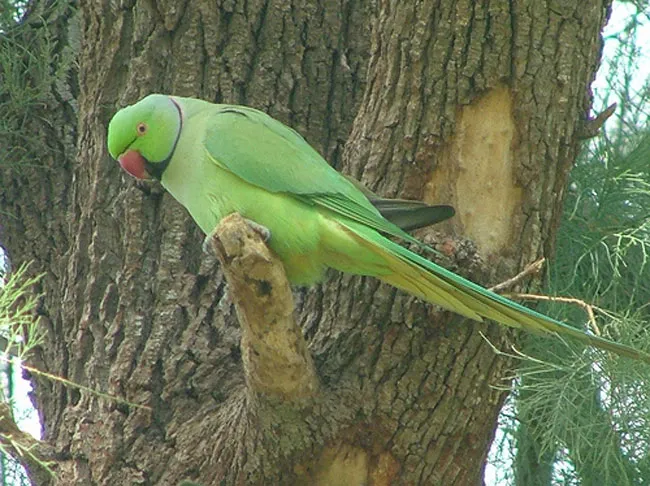
The expansion of world trade has long been blamed for the rise of invasive species and the environmental havoc such hitchhikers have dealt to delicate ecosystems. Now new evidence may bolster the case for new policies to combat the problem.
A new study found a significant decline in the number of bird species introduced into Eastern Europe during the Cold War, a time when much of the trade and travel between the region and its western counterparts ceased.
"Traditionally, we don't hear much about birds as an invasive species, but they can be," said Susan Shirley, a study team member and research associate in the College of Forestry at Oregon State University.
Although birds tend to stay in their native habitats, Shirley points out that they sometimes establish populations in a new location if they are somehow brought there.
For instance, an Asian species known as the common myna that’s found in North America, the Middle East, South Africa, Israel, Europe, Australia, New Zealand is considered a crop pest and has been included on the International Union for Conservation of Nature’s list of the 100 worst invasive species. Another species called the collard dove is a strong adapter to new environments and has spread all over Europe. Of even greater concern, Shirley said, are several species of wild-caught pet birds that have escaped and may be in the process of establishing populations in Europe.
The study, published in the journal Biological Conservation, found that prior to the Cold War, Western Europe had 36 non-European introduced species and Eastern Europe had 11. When international tension and restricted trade ended, the number of bird species introduced into Western Europe increased to 54.
The researchers suggest that clear policies need to be established to prevent further inflow of exotic species into previously isolated regions, and warn that the problems illustrated by this phenomenon in Europe may play out in similar ways all over the world as trade expands.
Get the world’s most fascinating discoveries delivered straight to your inbox.
"Global trade is a real concern for invasive species, and the lessons we can learn from the Cold War offer a warning flag to developing countries that are now expanding in an international economy," Shirley said.
- Image Gallery: Invasive Species
- Image Gallery: Rare and Exotic Birds
- Bird Study Reveals 10 Things You Didn't Know
