













Phew! Taking Selfies Doesn't Make You a Narcissist

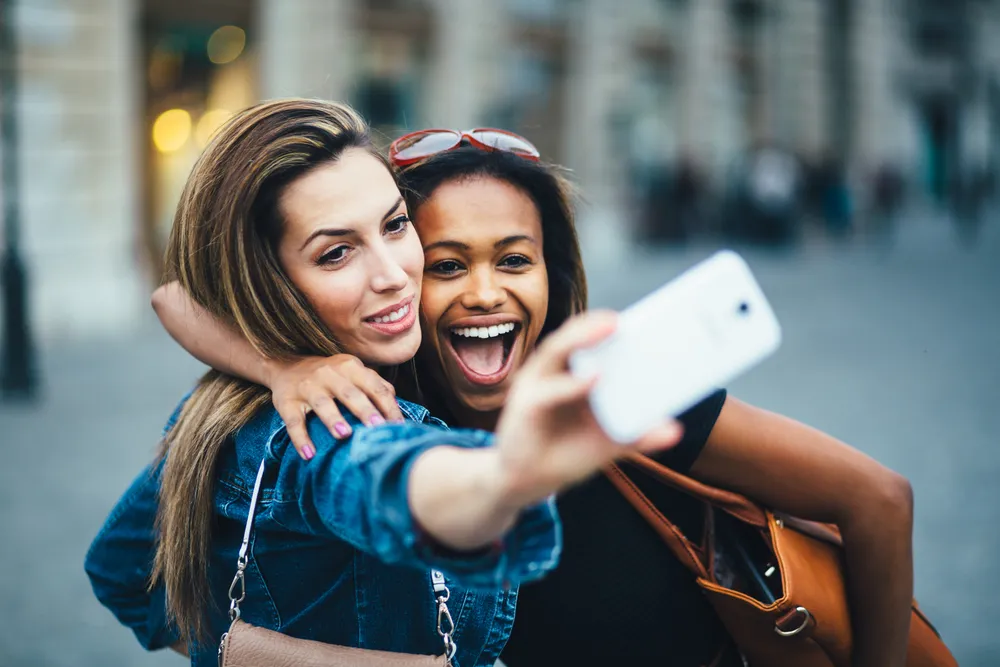
Sure, it's easy to label selfie-takers as self-obsessed, but a new small study finds that those who snap photos of themselves aren't necessarily narcissists.
Instead, the researchers found that selfie-takers fall into three categories: communicators, self-publicists and autobiographers.
"It's important to recognize that not everyone [who takes selfies] is a narcissist," study co-author Steven Holiday, who was a graduate student at Brigham Young University while working on the study, said in a statement. [5 Technologies for the Selfie-Obsessed]
In the study, the researchers asked 46 participants, nearly 75 percent of whom were women, to read 50 statements and say whether they agreed, disagreed or felt neutral about them. All of the statements started with the phrase "I take and share selfies" — for example, "I take and share selfies because I want people to be impressed with the way I look," or "I take and share selfies to share a part of my life with other people."
Next, the researchers asked the participants to rank the statements, on an 11-point scale, according to how similar the statements were to their own beliefs. The scale ranged from "most like I believe" (+5 points) to "least like I believe" (-5 points).
Finally, the researchers asked the participants questions about the statements they selected as the ones they most and least believed in, according to the study, which was published online in November 2016 in the journal Visual Communication Quarterly.
The researchers found that the participants' responses generally fell into three categories: communicators, self-publicists and autobiographers.
Get the world’s most fascinating discoveries delivered straight to your inbox.
The communicators
The communicators are people who "primarily take and share selfies to engage in conversation," the researchers wrote. These selfie-takers tended to say they most believed in statements that were centered on showing and sharing information with others, the researchers found. For example, the top statements communicators agreed with included "I take and share selfies to show people where I am," and "I take and share selfies to show people what I'm doing."
The communicators also made it clear that they use their selfies to engage in two-way communication, the researchers found. Indeed, the communicators strongly agreed with statements about using selfies to socialize and communicate in a fun new way.
The self-publicists
Similar to the communicators, the self-publicists used selfies to show and share events and places, but "this group sets themselves apart in their desire to focus the pictures on themselves and control their personal image," the researchers wrote. For example, self-publicists agreed with statements such as "I take and share selfies when I think I look nice," and "I take and share selfies because I have control of how I look."
The self-publicists strongly disagreed with the statement "I take and share selfies because I'm a part of the conversation," indicating that, unlike communicators, they don't use selfies to engage with others, the researchers wrote.
The self-publicists also tended to set themselves apart from others, according to the study. For example, two of the statements they disagreed with — "I take and share selfies to be someone I'm not," and "I take and share selfies to show the world what ordinary people look like" — suggest that they view their selfies as authentic representations of themselves, but also that they view themselves as being different from the crowd.
The autobiographers
Autobiographers use selfies to "chronicle themselves," according to the study. Indeed, the statements that most matched their beliefs about selfies included "I take and share selfies so I can record my memories," and "I take and share selfies to document myself for myself," the researchers found.
Unlike communicators and self-publicists, the autobiographers disagreed with statements about taking selfies to show others what they were doing, the researchers wrote. Rather, they agreed with statements such as "I take and share selfies to show the world who I am." Other statements that autobiographers were more likely to agree with, such as "I take and share selfies to learn to accept who I am," suggest that they use selfies to experience self-discovery, according to the study.
Originally published on Live Science.
