













West Africa Is Not 'Ebola Free' After All, New Case Shows

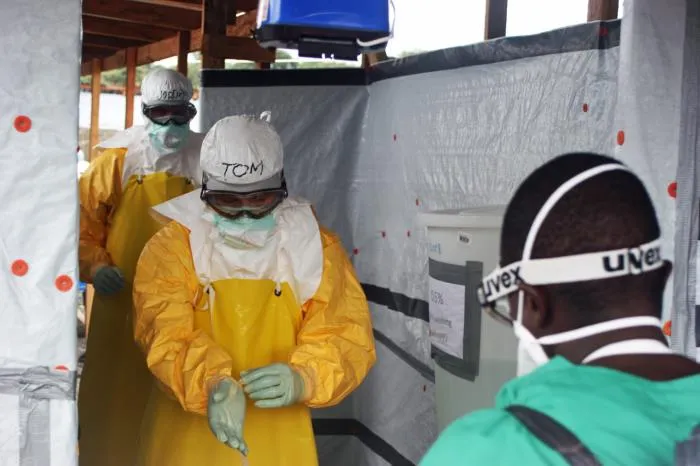
The Ebola outbreak in West Africa is not over — just one day after the region was declared "Ebola-free," a new case of the virus was confirmed in Sierra Leone.
The new case involved a 22-year-old woman, who was found dead in northern Sierra Leone and tested positive for the disease today (Jan. 15), according to The New York Times.
Just yesterday, the World Health Organization declared the end of the Ebola outbreak in West Africa, because the three hardest-hit countries in the region — Guinea, Liberia and Sierra Leone — had not reported a new Ebola case for at least 42 days. (Health officials typically wait 42 days to declare a country Ebola-free because this is twice as long as the 21-day incubation period of the virus, or the time it takes for a person with the virus to start showing symptoms.)
However, the new case in Sierra Leone is not unexpected — in its statement yesterday, the WHO stressed that all three West African countries were at high risk for additional, small outbreaks of the disease.
"Even though being declared Ebola-free is a major milestone," there's no guarantee that there won't be additional flare-ups of the disease, said Dr. Amesh Adalja, an infectious-disease specialist and a senior associate at the University of Pittsburgh Medical Center's Center for Health Security. [10 Deadly Diseases That Hopped Across Species]
WHO and its partners are now investigating how the woman in Sierra Leone became infected with Ebola, as well as identifying people who came into contact with the woman and taking steps to prevent further transmission.
It's possible that the woman may have become infected by an Ebola survivor. In rare cases, the virus can be transmitted from survivors through sexual activity, because the virus can persist in the semen of male survivors for as long as a year, according to the WHO.
Get the world’s most fascinating discoveries delivered straight to your inbox.
The woman might also have been exposed to a person who had a mild case of Ebola that wasn't known by authorities, Adalja said. In addition, there have been reports of Ebola survivors becoming contagious again, even after they were cured of the disease. It's suspected that a female Ebola survivor in Liberia became contagious again after she became pregnant, and passed the disease to her son, Reuters reported last month.
To help determine the source of the most recent Ebola case in Sierra Leone, health officials will need to trace the patient's activities in the days before she became ill, Adalja said.
Follow Rachael Rettner @RachaelRettner. FollowLive Science @livescience, Facebook& Google+. Original article on Live Science.

Rachael is a Live Science contributor, and was a former channel editor and senior writer for Live Science between 2010 and 2022. She has a master's degree in journalism from New York University's Science, Health and Environmental Reporting Program. She also holds a B.S. in molecular biology and an M.S. in biology from the University of California, San Diego. Her work has appeared in Scienceline, The Washington Post and Scientific American.