













Antarctica Has More Species than Galapagos

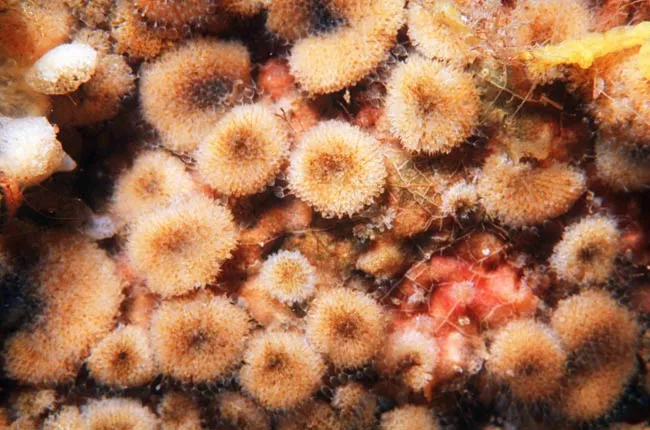
Islands around the Antarctic Peninsula have more known species than the Galapagos Islands and many temperate and tropical regions, a new inventory at the polar region reveals. A team of 23 scientists from five research institutes, including team members from the British Antarctic Survey, undertook the first comprehensive inventory of sea and land animals around the South Orkney Islands, near the tip of the Antarctic Peninsula. They used scuba divers and trawl nets to catch creatures from as deep as nearly a mile down (1,500 meters). The inventory turned up sea urchins, free-swimming worms, crustaceans and mollusks, mites and birds, including five new species (of bryozoans, more commonly known as sea moss, and isopods, the marine equivalents of wood-lice) to science. To arrive at the inventory, animals were recorded and then checked against a century of literature and modern databases. The team concluded there are more than 1,224 species in total at this Antarctic locale. Of these, nearly a third were new to the area, such as three octopuses, four snails, five sea urchins, and one sea star, to name a few.
The sea around the South Orkney Islands is much less rich in species than Hawaii, the Caribbean Islands or the Canaries, but surprisingly has more biodiversity than other tropical regions (only 800 sea animals are known to reside around the Galapagos Islands).
The research, detailed in the Journal of Biogeography, is part of the Census of Marine Life — a 10-year international effort started in 2000 to assess and explain the diversity and distribution of marine life in the world’s oceans. The unexpected abundance of life in the Antarctic region provides an important benchmark to monitor how these animals will respond to future environmental changes, said David Barnes, a British Antarctic Survey marine biologist and the study’s lead author. The temperature of the ocean around Antarctica has increased by an average of 33.8 degrees Fahrenheit in the past 50 years. The atmospheric temperature on the Antarctica Peninsula, specifically, has increased by 35.5 degrees F over the same time period and is one of the most rapidly warming areas on the planet.
- Video - Under Antarctic Ice
- North Pole vs. South Pole: 10 Wild Differences
- Gallery - Alien Life of the Antarctic
Get the world’s most fascinating discoveries delivered straight to your inbox.
