













Cases of Fatal Brain Disease Showing Up Decades After Infection

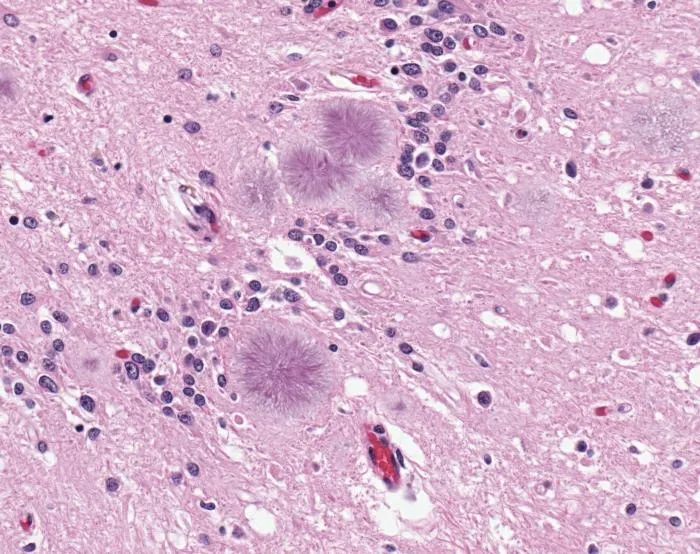
A few hundred people around the world caught a rare and fatal brain disease from contaminated growth hormone treatments they received during the 1950s through 1980s. Now, although use of the contaminated hormone stopped decades ago, scientists say they continue to see new cases of the brain disease today, up to 40 years after the patients were exposed, according to a new study.
The study describes 22 new cases of the brain disease, called Creutzfeldt-Jakob disease, that were diagnosed in people in the United Kingdom between 2003 and 2014. All of the patients had a growth hormone deficiency as children, and had been treated with growth hormone taken from cadavers — a practice that was stopped in 1985 when scientists realized some batches of the growth hormone were contaminated with prions, the infectious proteins that cause Creutzfeldt-Jakob disease (CJD).
"We know that prion diseases can have an enormously long incubation period," said Dr. Peter Rudge, a co-author of the new study and a consultant neurologist at the National Prion Clinic in London. "Ultimately, the disease will die out, but it is impossible to predict when," Rudge told Live Science. [10 Things You Didn't Know About the Brain]
The patients in the new study started to show symptoms of CJD about 20 to 40 years after they were treated with the hormone. Hand tremors and an unsteady gait were common first symptoms of the condition, and some patients experienced limb pain, dizziness or daytime sleepiness, the researchers said.
Once patients showed symptoms of the disease, their condition usually deteriorated quickly — on average, patients lived only about 14 months after first showing symptoms, the researchers said.
Researchers are uncertain when they will see the last of the CJD cases tied to the growth hormone treatments.
A total of 77 people in the United Kingdom have developed CJD since 1985, and there have been additional cases in other countries that used growth hormone from cadavers, including the United States, France and Australia.
Get the world’s most fascinating discoveries delivered straight to your inbox.
The new study also suggests that all of the patients in the United Kingdom became ill from a single person who had CJD and donated tissue after his or her death to be used in growth hormone treatments. Humans naturally have prions, however, so when people become infected with a "bad" or abnormal prion, the abnormal prion can cause changes in a person's natural prion proteins, leading to a buildup of abnormal prions in the brain, which causes disease.
Researchers think that certain people who are exposed to the abnormal proteins become sick more quickly: those whose natural prion gene matches that of the infecting prion at a specific point in the gene.
In the United Kingdom, most of the people who became ill early on had a genotype known as VV, and the researchers think the reason for this is that the tissue donor also had this genotype. "We know from human and animal work that compatibility between donor and recipient shortens incubation period," Rudge said.
It wasn't until more recently that researchers started to see more people get sick who had a different genotype — called MV or MM. In fact, among the 22 new cases, 17 people had the MV genotype, four had the MM genotype and just one had the VV genotype.
The researchers think that over time, the body may gradually produce prions that "match" the infectious prion, and once this happens, the disease can take hold.
The findings may have implications for cases of mad cow disease, known as variant Creutzfeldt-Jakob disease (vCJD) in people, which is also caused by prions and is tied to eating contaminated beef in the United Kingdom.
So far, all the people who have developed vCJD have had the MM genotype, leading some researchers to suspect that the infectious prions that cause vCJD can only sicken the people who have this genotype, Rudge said.
However, the new study suggests it's possible that people with other genotypes may yet become sick with vCJD. If people with other genotypes have a longer incubation period of the disease than the people sickened to date, "there is a risk that a second epidemic of vCJD could occur," in people who ate tainted beef, Rudge said.
"Furthermore, it is possible that many people are incubating this disease," without knowing it, he said.
The new study was published online Aug. 12 in the journal Brain.
Follow Rachael Rettner @RachaelRettner. Follow Live Science @livescience, Facebook & Google+. Original article on Live Science.

Rachael is a Live Science contributor, and was a former channel editor and senior writer for Live Science between 2010 and 2022. She has a master's degree in journalism from New York University's Science, Health and Environmental Reporting Program. She also holds a B.S. in molecular biology and an M.S. in biology from the University of California, San Diego. Her work has appeared in Scienceline, The Washington Post and Scientific American.