













Eye Color Linked to Alcoholism Risk
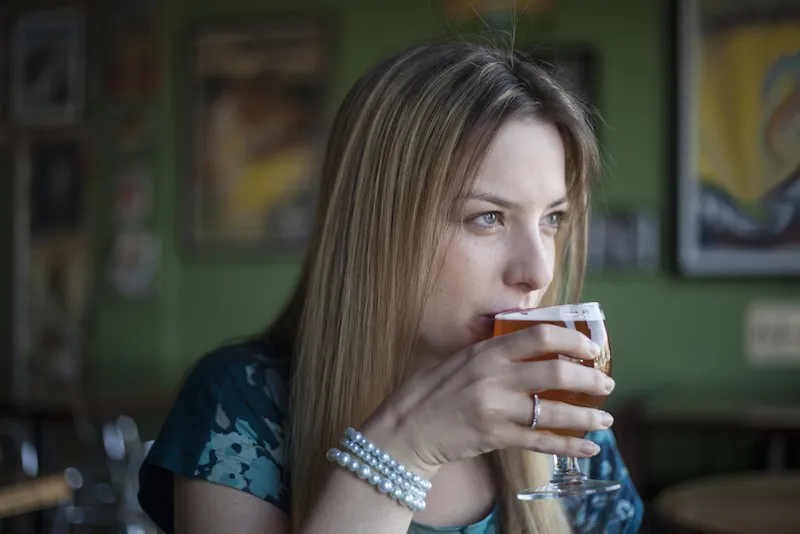
People with light-colored eyes may have a higher risk of alcoholism than people with dark-brown eyes, new research suggests.
In the study, researchers looked at 1,263 Americans of European ancestry, including 992 people who were diagnosed with alcohol dependence and 271 people who were not diagnosed with alcohol dependence. They found that the rate of alcohol dependence was 54 percent higher among people with light-colored eyes — including blue, green, gray and light-brown eyes — than among those with dark-brown eyes.
"This suggests an intriguing possibility — that eye color can be useful in the clinic for alcohol dependence diagnosis," study co-author Arvis Sulovari, a graduate student in cellular, molecular and biological science at the University of Vermont, said in a statement.
The prevalence of alcoholism was the highest in people with blue eyes — their rate was about 80 percent higher than that of people with other eye colors, according to the study.
Moreover, the connection between eye color and an increased risk of alcoholism was confirmed by the results of a genetic analysis, which showed a significant link between the genetic components responsible for eye color and those that studies have linked with a person's risk of alcohol dependence, the researchers said. [7 Ways Alcohol Affects Your Health]
However, the researchers still don't know the exact reasons that could underlie the link, and more research is needed to examine it, study co-author Dawei Li, an assistant professor of microbiology and molecular genetics at the University of Vermont, said in a statement.
Previous research on people of European ancestry has shown that those with light-colored eyes may consume more alcohol on average than dark-eyed individuals, the researchers said. Other studies also have demonstrated a link between eye color and people's risk of psychiatric illness, addiction and behavioral problems, according to the study.
Get the world’s most fascinating discoveries delivered straight to your inbox.
For example, studies have established a link between light eye color and an increased risk of seasonal affective disorder (SAD), which often co-occurs with alcohol dependence, the researchers said. A possible explanation for the link between light eye color and SAD is that light-eyed people may be more sensitive to variations in light levels, which has been associated with abnormal changes in the production of the sleep-regulating hormone melatonin and, consequently, with SAD, the researchers said.
However, the new study has shortcomings, said Gil Atzmon, an associate professor of medicine and genetics at Albert Einstein College of Medicine in New York, who was not involved in the study.
For example, although the researchers took into account participants' gender and age, to see whether those factors may have played a role in people's risk of alcohol dependence, they did not examine other factors that also may have affected the participants' risk of alcoholism, such as their income level or their mental health status, Atzmon said.
The researchers did not look at whether any of the people in the study had depression, a condition that may be associated with excessive drinking, he said.
The new study was published in the July issue of the American Journal of Medical Genetics: Neuropsychiatric Genetics Part B.
Follow Agata Blaszczak-Boxe on Twitter. Follow Live Science @livescience, Facebook & Google+. Originally published on Live Science.