













'Love' Hormone Sobers Up Drunken Rats
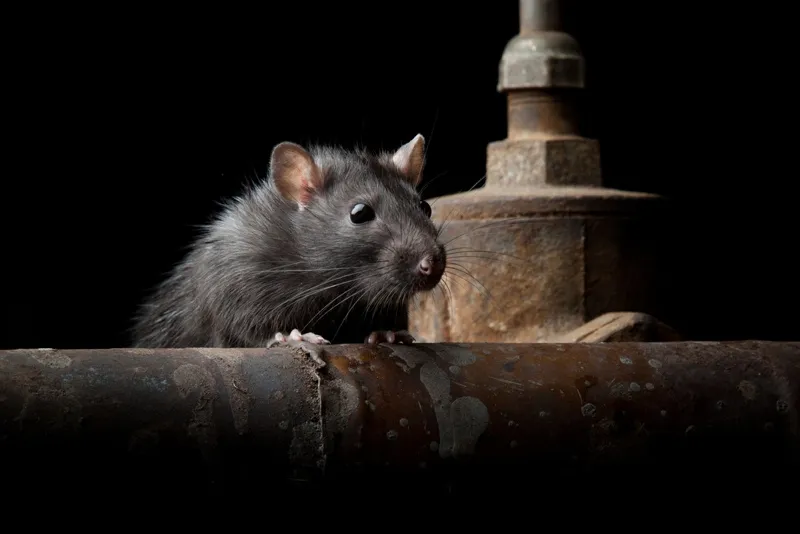
A little injection of the so-called 'love' hormone, oxytocin, can sober up drunken rats, reversing their clumsy alcohol-induced behaviors, scientists report.
In the new study, Michael Bowen of the University of Sydney’s School of Psychology and his colleagues infused oxytocin into the brains of rats. When the team members combined the hormone with an intoxicating dose of alcohol, they noticed the rats didn’t show the lack of coordination typical with that level of alcohol consumption.
"In the rat equivalent of a sobriety test, the rats given alcohol and oxytocin passed with flying colors, while those given alcohol without oxytocin were seriously impaired," said Bowen. [11 Interesting Effects of Oxytocin]
Instead of testing the rats' sobriety based on how well they could walk in a straight line or hold one finger to their nose, the rats were forced to hang upside down and flip right side up from their backs. [Video - Watch Drunk Rats in Action]
In the righting-reflex test, an experimenter placed the rat on its back. He then measured the amount of time it took the rat to flip back over onto all four paws. At 35 minutes in, intoxicated rats took as long as 3 seconds to right themselves, but those that were also given oxytocin took as little as half that time.
Finally, in the open-field test, the rats were allowed to roam freely in a small box (seen in the video of the experiment). Intoxicated rats spent their time hunched in a corner. But sober rats, and those that were given both alcohol and oxytocin, spent their time moving around.
Oxytocin worked so well that "we can't tell from their behavior that the rats are actually drunk,” Bowen said in a statement. "It's a truly remarkable effect."
Get the world’s most fascinating discoveries delivered straight to your inbox.
The effects of both alcohol and oxytocin originate in the brain. Oxytocin is produced by a structure called the hypothalamus, and then travels to the pituitary gland, which releases it into the bloodstream. But, while still in the brain, it prevents any present alcohol from accessing specific sites that provide fine motor control (so-called delta subunit GABA-A receptors), therefore decreasing alcohol's intoxicating effects, the researchers found.
Oxytocin only prevents alcohol from accessing specific sites in the brain. It has no effect on the amount of alcohol that flows through the bloodstream, the researchers said. So it will never save a person from a DUI arrest. Once the researchers conduct these studies on humans in the near future, they do expect to see lower levels of speech and cognition impairment after relatively high levels of alcohol consumption.
Although it looks like this research won’t lead to a sobriety pill, Bowen remains hopeful that there could be an oxytocin-based treatment for human alcohol-use disorders in the not too distant future.
"In rats, oxytocin reduces motivation to consume alcohol in both the short- and long-term, it blocks the intoxicating effects of alcohol, and it reduces the severity of alcohol withdrawal symptoms," Bowen told Live Science in an email. "If it's shown to be as effective in humans as it is in rats it could be a game-changer."
The study is detailed this week in the journal Proceedings of the National Academy of Sciences.
Follow Shannon Hall on Twitter @ShannonWHall. Follow Live Science @livescience, Facebook & Google+. Original article on Live Science.