













In Images: Graveyard of Ichthyosaur Fossils Found in Chile

Fossil Bonanza

Dozens of nearly complete fossils of marine reptiles known as ichthyosaurs were found in sedimentary rock near the Tyndall glacier in southern Chile.
Read full story
'Fish Lizards'
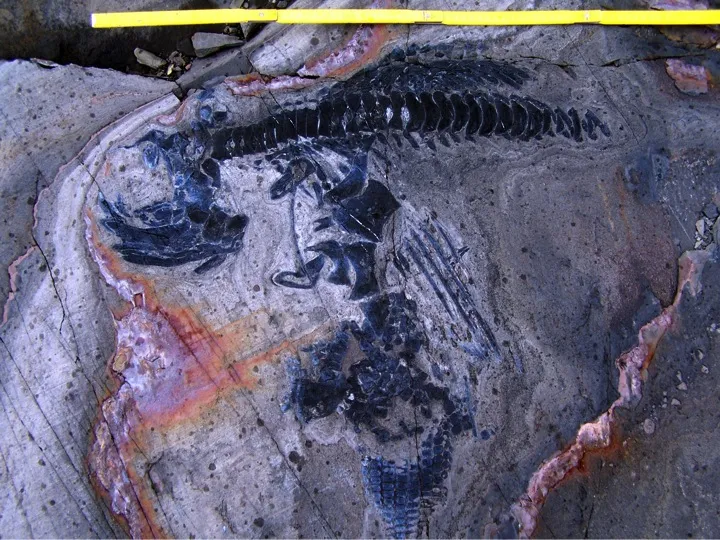
Ichthyosaurs, whose Greek name means "fish lizards," were a group of large, fast-swimming marine reptiles that lived during the Mesozoic Era, about 245 to 90 million years ago.
Read full story
Well-Preserved Skeletons

The team found fossils from juveniles as well as adults, with the largest more than 16 feet long (5 meters). The skeletons were extremely well preserved — some even retained soft tissues.
Read full story
Muddy Demise

Probably killed during a series of catastrophic mudslides, the creatures were preserved in deep-sea sediments that were later exposed by the melting glacier, the researchers say.
Read full story
Tyndall Glacier

Stinnesbeck and his team found the early Cretaceous (100 to 150 million years old) specimens near the Tyndall Glacier in the Torres del Paine National Park in Chile.
Read full story
Fossils Emerge

As the glacier melted, the rock containing the fossils became exposed, Stinnesbeck told Live Science.
Read full story
Get the world’s most fascinating discoveries delivered straight to your inbox.
