













Truth Found in Tales of Monster Fish
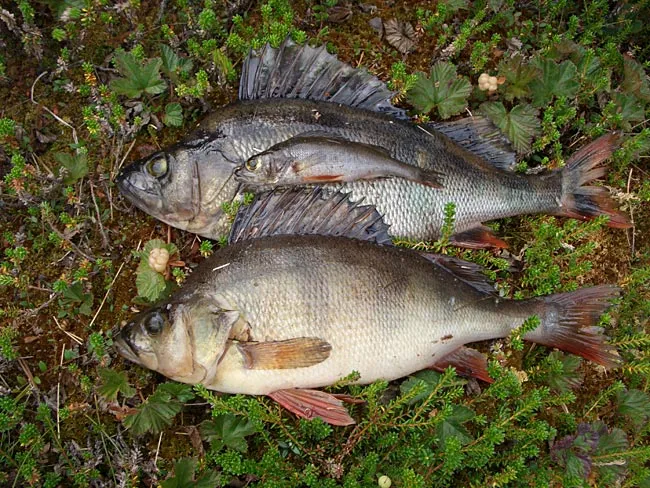
Anglers all have tales about the one that got away, the fish of legendary size that stripped the line from the reel. A new study suggests why that there might indeed be giants and offers an explanation for how they grow so huge.
Turns out fishermen themselves can be responsible for the monsters.
If a lake or pond is overfished, and a lot of the big ones are caught, the situation is ripe for oversized freaks to develop, according to a new computer model.
The research suggests that harvesting only large fish knocks out the food competition for the remaining adults, allowing the adults to gorge on smaller fish and inflate to gigantic proportions. The effect is strongest for fish prone to cannibalizing their own. A Eurasian perch growing in such a situation, for example, can become more than four times as big as an adult fish the same age in a body of water not heavily fished.
"The destabilization of a cannibalistic population can induce the growth of 'cannibalistic giants,'" scientists write in the August edition of the American Naturalist. Further, the population becomes less stable and more susceptible to crashing into extinction, especially as the rate of fishing increases. The giants were not found to develop in the virtual populations spared from harvesting.
The effect also applies to fish species that are not cannibals, but it is less pronounced and does not tend to push the population toward extinction, the computer model suggests.
There could be a useful lesson for fish farmers.
Get the world’s most fascinating discoveries delivered straight to your inbox.
The model accounted for a range of factors, from food availability to reproductive rates and digestion time. When the researchers over-harvested small fish, cannibalistic giants were not produced, but non-cannibalistic fish grew bigger, faster—a technique that fish farms could use to grow market-ready crops more quickly.
The work was led by Tobias van Kooten of Umea University, in Umea, Sweden.
- VIDEO: The Fishy Smell of Home
- GALLERY: Freaky Fish
- Subordinate Fish Starve to Avoid Conflict