















How Do Wind Turbines Work?
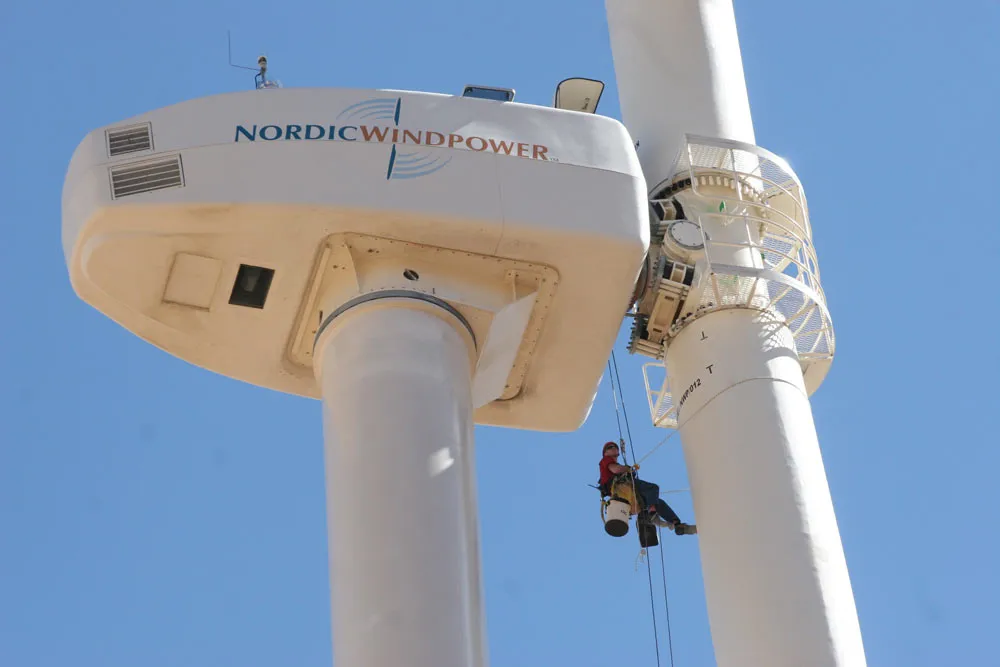
One of the fastest-growing sources of energy in the world, wind turbines generate electricity without emitting greenhouse gases into the environment (unlike fossil fuels). These modern-day windmills convert mechanical energy from the wind into electrical power.
Most wind turbines have three main parts: the tower (the long stem that connects to the ground); the blades, which connect to a central hub (the rotor); and the nacelle (a box behind the blades that contains the generator).
While there are several different designs for wind turbines — one of which, the "vertical-axis design," resembles a giant eggbeater — most of these machines have a "horizontal-axis design," in which the axis of the blades is horizontal to the ground.
Like a giant pinwheel, the rotor of a wind turbine will spin when triggered by a strong-enough wind. The rotor is attached to a drive shaft, which leads into the nacelle behind the blades and activates a generator. The generator creates electricity, which goes to a transformer that converts it to the right voltage for the electricity grid.
The wind turbines used by utility companies to provide power to a grid are usually placed in groups or rows, called "wind farms," to take full advantage of windy areas.
Follow Elizabeth Palermo on Twitter @techEpalermo, Facebook or Google+. Follow LiveScience @livescience. We're also on Facebook & Google+.
Get the world’s most fascinating discoveries delivered straight to your inbox.