













Biological Transformers Shrink and Grow to Elude Predators
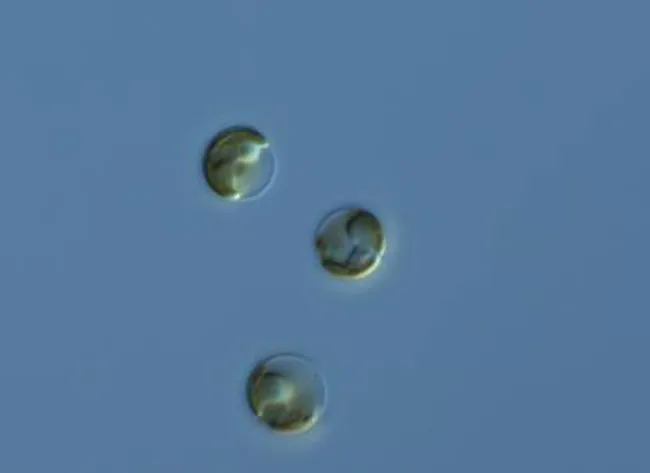
Saltwater algae are biological Transformers that can shrink or expand in size to defend against the eating habits of hungry predators.
The technique makes the saltwater alga species Phaeocystis globosa almost 100-times less likely to be eaten, a finding detailed the June 11 online version of the Proceedings of the National Academy of Sciences.
"Not only do these single celled organisms recognize danger, they identify the species of the attacker and, depending on the species, respond in opposite ways,” said researcher Mark Hay, a Georgia Institute of Technology marine biologist. "These things are really assessing the context of their environment to advantage themselves and disadvantage their enemies."
Two predators feed on these algae: large protozoa called ciliates and small crustaceans called copepods. Ciliates have a taste for small cells of algae, whereas copepods prefer to eat large, ball-shaped colonies.
Researchers found that algae sensing chemical attack signals from ciliates grew large enough to be too big for ciliates to consume. But when the algae sensed the approaching chemicals of attacking copepods, they shrunk in size. The change in size took three to six days.
“When one of these cells changes to the biggest colony form, although it takes a while, it’s like changing from [the size of] a mosquito to 76 blue whales or 3,000 bull elephants,” Hay said. “That’s a pretty dramatic difference.”
The incredible performance of the algae could help researchers better understand changes in climate change related to the carbon cycle in cold oceans.
Get the world’s most fascinating discoveries delivered straight to your inbox.
Until now, biologists have been conflicted as to whether the carbon seized in saltwater algae moves up the food chain, or whether it sinks, unused, to the bottom of the ocean.
"I think both of the theories are right," Hay told LiveScience.
When small creatures such as ciliates feed on carbon-rich algae, the carbon rises up the food chain as it's eaten by larger and larger marine life, including fish. Many of these fish live near the surface of the oceans, where warmer water can hold much less carbon dioxide than colder, deeper waters. The carbon in the fish is easily released into the air and will eventually contribute to greenhouse gases in the atmosphere.
But the algae and carbon consumed by larger copepods end up in fecal packages that sink down to the depths of the ocean, where carbon is stored more securely and less likely to escape into the atmosphere.
"It depends on what form the alga are in," Hay said. "This is an example of the biological context being tremendously important."
- Rich Life Under the Sea
- Top 10 : Secret Weapons
- Video: Goldilocks and the Greenhouse