













E-Cigarettes May Not Help Smokers Quit

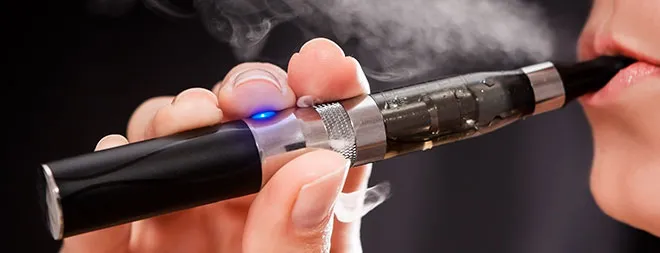
Although electronic cigarettes (e-cigarettes) have been marketed as a way to help people quit smoking, a new study finds no evidence to support this claim.
In the study, smokers who said they used e-cigarettes in addition to regular cigarettes were no more likely to quit smoking a year later than those who did not use the electronic devices. The research involved nearly 1,000 U.S. smokers.
In addition, e-cigarette users did not cut down on traditional cigarette smoking compared to non e-cigarette users (both gropus smoked close to 14 e-cigarettes per day). [Kick the Habit: 10 Scientific Quit-Smoking Tips]
E-cigarettes do not burn tobacco. Instead, they vaporize nicotine, which the user then inhales.
The researchers note that few people in the study (less than 10 percent) used e-cigarettes, which may have limited the study's ability to detect a link between e-cigarette use and quitting.
Still, the findings "add to the current evidence that e-cigarettes may not increase rates of smoking cessation," the researchers, from the Center for Tobacco Control Research and Education at the University California, San Francisco, wrote in the March 25 issue of the journal JAMA Internal Medicine.
"Regulations should prohibit advertising claiming or suggesting that e-cigarettes are effective smoking cessation devices until claims are supported by scientific evidence," the researchers said.
Get the world’s most fascinating discoveries delivered straight to your inbox.
In an editorial accompanying the study, Dr. Mitchell H. Katz, a deputy editor of the journal,said, "Unfortunately, the evidence on whether e-cigarettes help smokers to quit is contradictory and inconclusive." The new findings "increase the weight of evidence indicating that e-cigarettes are not associated with higher rates of smoking cessation."
Follow Rachael Rettner @RachaelRettner. Follow Live Science @livescience, Facebook & Google+. Original article on Live Science.

Rachael is a Live Science contributor, and was a former channel editor and senior writer for Live Science between 2010 and 2022. She has a master's degree in journalism from New York University's Science, Health and Environmental Reporting Program. She also holds a B.S. in molecular biology and an M.S. in biology from the University of California, San Diego. Her work has appeared in Scienceline, The Washington Post and Scientific American.