In response to U.S. support for Israel during the Arab-Israeli War, the member nations of the Organization of the Petroleum Exporting Countries (OPEC) began an oil embargo, which eventually included Western Europe and Japan.
November 1973: Nixon responds
(Image credit: Nixon Library)
The Emergency Petroleum Allocation Act, approved by President Richard Nixon, authorized federal controls over the price, production and marketing of oil and gas. It was just one of many government efforts to manage the effects of the embargo.
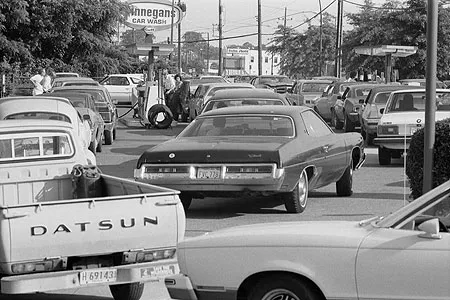
December 1973: Gas lines form
(Image credit: Dept. of State)
As fall turned into winter, and gasoline became an increasingly rare commodity, long lines formed at gas stations, fraying commuters' nerves. As supplies dwindled, many gas stations went out of business.
After the OPEC oil embargo entered its third month, consumers began to realize that smaller, energy-efficient cars had distinct advantages over larger, gas-guzzling automobiles and trucks. Consumers also began to save energy at home by moderating their use of hot water, heat and air-conditioning.
February 1974: Project Independence
(Image credit: Ford Library)
Nixon's Secretary of State, Henry Kissinger, introduced Project Independence, the first of many programs designed to make the U.S. less dependent on foreign sources of oil and gas.
March 1974: Embargo ends
(Image credit: National Archives)
After Israel withdrew the last of its troops from the west side of the Suez Canal, OPEC agreed to end its oil embargo, closing a dark chapter in energy history.
Sign up for the Live Science daily newsletter now
Get the world’s most fascinating discoveries delivered straight to your inbox.
Marc Lallanilla has been a science writer and health editor at About.com and a producer with ABCNews.com. His freelance writing has appeared in the Los Angeles Times and TheWeek.com. Marc has a Master's degree in environmental planning from the University of California, Berkeley, and an undergraduate degree from the University of Texas at Austin.