















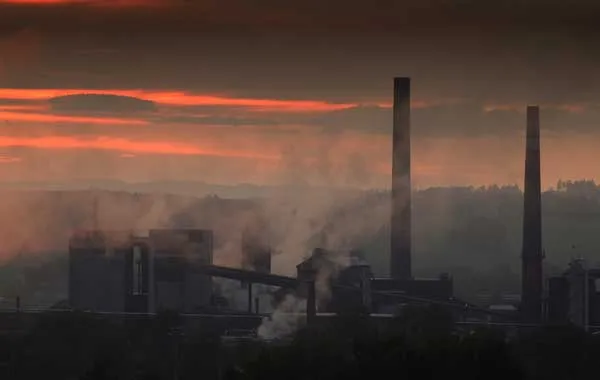
The long California drought is worsening winter haze in the state. The combination of low rainfall and stagnant, still air has increased the levels of soot and particulates in the air near the ground. As a result, the state has had 33 percent more "bad air days" this year than it did last winter, the Los Angeles Times reported.
The haze formed from soot generally gets worse during the wintertime, but this year's drought has made conditions even worse. The San Joaquin Valley, which produces much of the state's agriculture, had 66 days between November and February where fine particulate matter in the air exceeded federal guidelines. Fine particulates can get embedded in the lungs and cause inflammation, and have been tied to cancer, heart disease and breathing troubles.
To offset the heavy haze, regulators across the state are instituting burn bans against wood fires, which can amplify the amount of fine particulates in the air. But some environmentalists argue that cutting industrial emissions, which produce the fine particulate in the first place, would be more effective, the Times said.
Follow Tia Ghose on Twitter and Google+. Follow Live Science @livescience, Facebook & Google+.
Get the world’s most fascinating discoveries delivered straight to your inbox.

Tia is the editor-in-chief (premium) and was formerly managing editor and senior writer for Live Science. Her work has appeared in Scientific American, Wired.com, Science News and other outlets. She holds a master's degree in bioengineering from the University of Washington, a graduate certificate in science writing from UC Santa Cruz and a bachelor's degree in mechanical engineering from the University of Texas at Austin. Tia was part of a team at the Milwaukee Journal Sentinel that published the Empty Cradles series on preterm births, which won multiple awards, including the 2012 Casey Medal for Meritorious Journalism.