















Despite rumors, the singularity, or point at which artificial intelligence can overtake human smarts, still isn't quite here. One of the world's most powerful supercomputers is still no match for the humble human brain, taking 40 minutes to replicate a single second of brain activity.
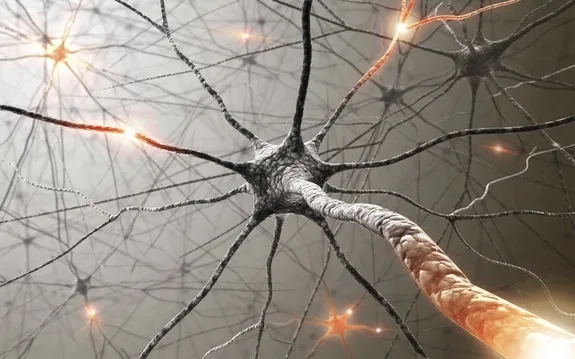
Researchers in Germany and Japan used K, the fourth-most powerful supercomputer in the world, to simulate brain activity. With more than 700,000 processor cores and 1.4 million gigabytes of RAM, K simulated the interplay of 1.73 billion nerve cells and more than 10 trillion synapses, or junctions between brain cells. Though that may sound like a lot of brain cells and connections, it represents just 1 percent of the human brain's network.
The long-term goal is to make computing so fast that it can simulate the mind— brain cell by brain cell— in real-time. That may be feasible by the end of the decade, researcher Markus Diesmann, of the University of Freiburg, told the Telegraph.
Follow Tia Ghose on Twitter and Google+. Follow LiveScience @livescience, Facebook & Google+.
Get the world’s most fascinating discoveries delivered straight to your inbox.

Tia is the editor-in-chief (premium) and was formerly managing editor and senior writer for Live Science. Her work has appeared in Scientific American, Wired.com, Science News and other outlets. She holds a master's degree in bioengineering from the University of Washington, a graduate certificate in science writing from UC Santa Cruz and a bachelor's degree in mechanical engineering from the University of Texas at Austin. Tia was part of a team at the Milwaukee Journal Sentinel that published the Empty Cradles series on preterm births, which won multiple awards, including the 2012 Casey Medal for Meritorious Journalism.