













'Baby Illusion' Makes Family's Youngest Seem Tiny

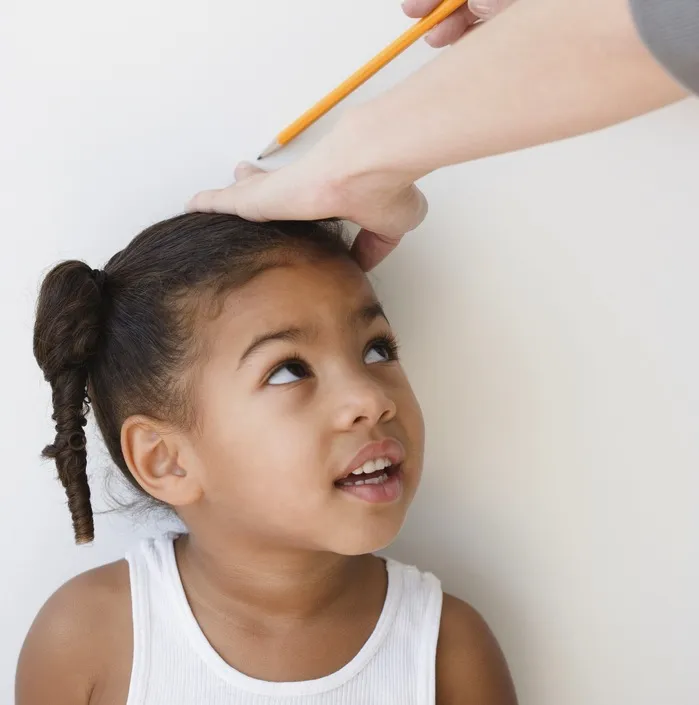
The youngest child in a family may be perpetually the baby, according to new research showing that moms literally perceive their littlest as smaller than he or she really is.
This "baby illusion" often shatters suddenly upon the birth of another child, researchers wrote today (Dec. 16) in the journal Current Biology. In a survey of 747 moms, more than 70 percent reported their first child suddenly seemed larger and older upon the birth of a second baby.
"Contrary to what many may think, this isn't happening just because the older child just looks so big compared to a baby," Jordy Kaufman of the Swinburne University of Technology in Australia said in a statement. "It actually happens because all along, the parents were under an illusion that their first child was smaller than he or she really was. When the new baby is born, the spell is broken, and parents now see their older child as he or she really is."
To get to the heart of the illusion, Kaufman and colleagues asked mothers to estimate the height of one of their children on a blank wall. The researchers then compared the marks made by mom with the kid's actual height. Some of the kids were older siblings, while others were either the youngest in their family or were only children.
Moms routinely underestimated the size of their youngest or only kids, the results revealed. On average, only children or youngest children were seen as almost 3 inches (7.5 centimeters) shorter than they really were. In contrast, moms were right on target in estimating their older children's height.
The illusion could be beneficial for kids and parents alike, as seeing their youngest as more vulnerable than they really are could prompt parents to pour more resources into that child — an important key to survival in a family where multiple kids need attention. The findings also might lend credence to the idea that birth order helps shape personality.
"The key implication is that we may treat our youngest children as if they are actually younger than they really are," Kaufman said. "In other words, our research potentially explains why the 'baby of the family' never outgrows that label. To the parents, the baby of the family may always be 'the baby.'"
Get the world’s most fascinating discoveries delivered straight to your inbox.
Follow Stephanie Pappas on Twitter and Google+. Follow us @livescience, Facebook & Google+. Original article on LiveScience.

Stephanie Pappas is a contributing writer for Live Science, covering topics ranging from geoscience to archaeology to the human brain and behavior. She was previously a senior writer for Live Science but is now a freelancer based in Denver, Colorado, and regularly contributes to Scientific American and The Monitor, the monthly magazine of the American Psychological Association. Stephanie received a bachelor's degree in psychology from the University of South Carolina and a graduate certificate in science communication from the University of California, Santa Cruz.