













Product of Olive Oil Could Help Deliver Drugs

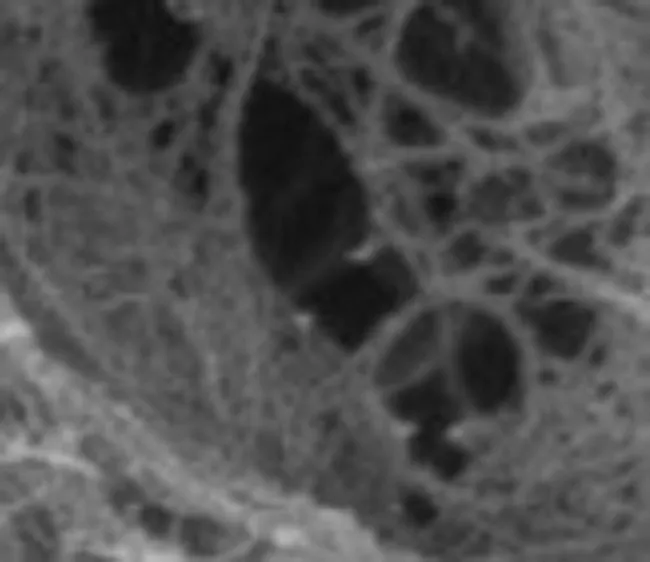
Sugar and olive oil may not mix well in a jar. But in the lab, scientists have used them to create a very tiny capsule that can be loaded with medicine or food.
The new "organogel" was made by adding a simple enzyme to activate a sugar, which changed olive oil and other liquid solvents into organic gels.
"We are using the building blocks provided by nature to create new nanomaterials that are completely reversible and environmentally benign," said study leader Jonathan Dordick of Rensselaer Polytechnic Institute.
When the sugar is activated, a compound that self-assembles into three-dimensional fibers is created. The fibers measure almost 50 nanometers in diameter. A nanometer is one billionth of a meter; a human hair is roughly 100,000 nanometers wide.
When the fibers intertwine, the large amounts of solvent pack together and trap about 10,000 molecules.
"The development of new materials that are molecularly defined and chemically functional at the nanoscale is of critical importance to biological applications such as drug delivery," Dordick said. "We are finding the natural world has provided tools to create these materials without the need to generate new compounds that may be harmful to the body or environment."
- Image Gallery: Micromachines
- Remote Control Drug Delivery Possible
- Implantable Lazy Susans Could Deliver Drug Cocktails
- Nanotech Now: Tiny Technology All Around You
- DNA Art: Origami Goes Nano
Get the world’s most fascinating discoveries delivered straight to your inbox.
