Two years ago, I visited Laguna San Ignacio in Baja California, Mexico — a magical place that is home to the gray whale, one of Earth's largest mammals. Most of my time on the water during that excursion was spent with a gray whale mother and her calf. They approached the boat several times, granting me one of the most amazing wildlife encounters of my life.
Meanwhile, far away in the waters of the northern Atlantic, whales are not receiving such a welcome reception. Commercial whaling vessels are hunting endangered fin whales for their meat at an alarming rate — despite a global ban by the International Whaling Commission. Hvalur, the Icelandic commercial whaling company, recently resumed its commercial hunt of endangered fin whales after a two-year hiatus. Between June 1 and Aug. 19 of this year, 100 fin whales have been slaughtered. Hvalur has exported thousands of tons of whale meat annually to Japan, and John Vidal, reporting for the Guardian, found that Hvalur killed 148 endangered fin whales to feed that trade in 2010 alone.
In 2011, however, successive natural disasters in Japan halted Icelandic commercial fin whaling for a while by disrupting demand for the product. But as Japan's economy slowly improved (and continues to improve), so does the market for fin-whale meat, providing Iceland with an economic incentive to continue this practice.
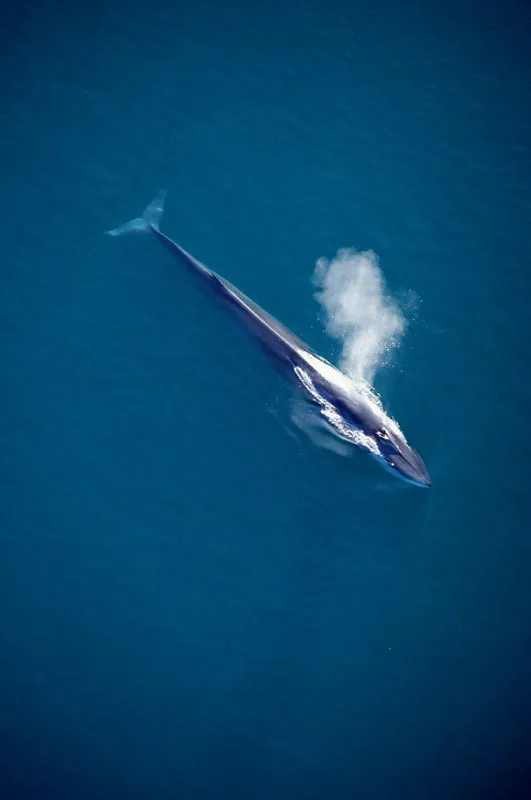
Balaenoptera physalus (fin whale) viewed underwater in the Ligurian Sea, 40 miles off the coast of Monaco. General restrictions apply; One-Time Use Only.
(Image credit: Emanuele Coppola / WWF-Canon; One-Time Use Only.)
If the hunt does not end, Icelandic whalers will likely kill as many as 180 fin whales this year. Without intervention, commercial whaling — coupled with other threats, like ocean noise and ship strikes — could push fin whales beyond the point of recovery.
It's difficult to consider the loss of this majestic species at the hand of humans when, ultimately, we have the power to stop it.
With fin whales on the International Union for Conservation of Nature's Red List as an endangered species, Iceland's commercial whaling has drawn international attention. In 2010, WWF worked with a coalition of nongovernmental organizations to encourage the U.S. government to address Iceland's violation of international whaling and trade bans.
Sign up for the Live Science daily newsletter now
Get the world’s most fascinating discoveries delivered straight to your inbox.
In 2011, the U.S. Department of Commerce found Iceland was undermining the commercial-whaling ban. In response, President Barack Obama imposed diplomatic sanctions, with a promise to revisit the issue if Iceland resumed its hunt of fin whales. Now, Hvalur has done just that, in blatant disregard of U.S. and international requests.
It is time for Obama to take decisive action and impose economic sanctions that bring Iceland's whaling to an effective halt. Anything short of this will fail to alter Iceland's course of action — and fail to prevent the ongoing killing of endangered fin whales.
On WWF's website, you can learn how to help protect these majestic mammals.
The views expressed are those of the author and do not necessarily reflect the views of the publisher. This article was originally published on LiveScience.