













Interns Find Medieval Pottery at Richard III Dig

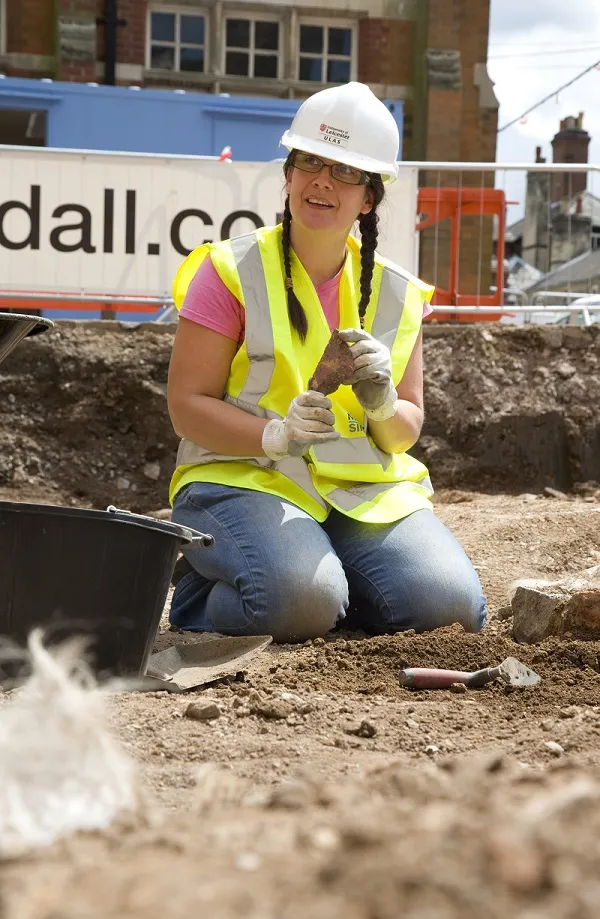
A week into the new excavation at Richard III's gravesite, archaeology interns have uncovered some medieval artifacts, the dig team announced.
Last year, archaeologists found the battle-bruised skeleton of the British monarch under a parking lot in Leicester, England, among the buried ruins of the lost Grey Friars church. An expanded four-week dig kicked off at the site on July 1 so that the team could further investigate the church, with a special focus on the choir area, where Richard's body was discovered.
The University of Leicester team has recruited student interns for the project. So far, they have unearthed medieval pottery fragments while removing ground layers at the site. [Images: The Discovery of Richard III]
"The dig has been fantastic so far — everyone is really supportive and we found quite a lot of things already. We have found lots of bits of medieval pottery tiles," Emma Link, 16, from Humberstone, Leicester, said in a statement. "This is a brilliant chance to get work experience in this field. I now know for certain this is what I want to do."
Another intern, Claire Calver, 37, expressed her excitement to be working on the project.
"I couldn't quite believe I have got the opportunity to work at Grey Friars, where Richard III was discovered," said Calver, a mother of five, who is working toward an undergraduate archaeology degree at the University of Leicester.
"It is one thing to read about all the fantastic archaeological discoveries that have been made, but to really experience archaeology you have to get out there yourself," Calver added in a statement. "I'm hoping to learn more about the techniques of recording finds during the dig."
Get the world’s most fascinating discoveries delivered straight to your inbox.
The team is on the lookout for artifacts a bit sexier than pottery sherds this summer in their new 82-by-55-foot (25-by-17-meter) trench. The archaeologists have said they would examine other burials that were exposed at Grey Friars, including a stone coffin suspected to belong to a medieval knight. They will also be watching for evidence of headless friars, who were beheaded by Henry IV and buried at the church, according to legend.
Richard III ruled England from 1483 until 1485, when he died in battle during the War of the Roses. Lead archaeologist Richard Buckley and his team started digging beneath the Leicester City Council parking lot last August, looking for the king's grave based on historical records. They soon found the Grey Friars church and then a male skeleton thought to be the monarch.
In February, researchers announced that DNA from the teeth and a bone matched with a modern relative of Richard III. The body eventually will be reinterred in the Leicester Cathedral, and a visitor center is being built at the site to showcase some of the finds.
Follow Megan Gannon on Twitter and Google+. Follow us @livescience, Facebook & Google+. Original article on LiveScience.com.
