















Why Self-Consciousness Peaks in Teenage Years

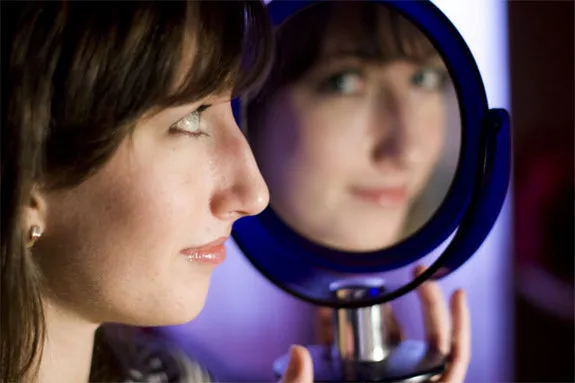
Some of the more awkward growth spurts that mark adolescence occur in the brain, and a new study suggests certain developmental changes might make teens ultra-sensitive to the gaze of other people.
Teens are famous for their self-consciousness and suspicion that everyone is watching them. In the new study, compared with children and adults, teens who thought one of their peers was looking at them experienced much stronger emotional, physiological and neural reactions, the researchers found.
In their experiment, 69 participants, ranging in age from 8 to 22 years old, were told they would be testing a new video camera as they lied down in a functional magnetic resonance imaging (fMRI) machine. The participants were told a same-sex peer of similar age would be watching the video feed in another room. There was not actually a camera in the brain-scanning machine, but the participants had a screen in front of them indicating whether the camera was off, warming up, or on.
"We were concerned about whether simply being looked at was a strong enough 'social evaluation' to evoke emotional, physiological and neural responses," study researcher Leah Somerville, a psychological scientist at Harvard University, said in a statement. "Our findings suggest that being watched, and to some extent anticipating being watched, were sufficient to elicit self-conscious emotional responses at each level of measurement."
Those levels of measurement included the participants' self-reported embarrassment, physiological arousal, and activation in the medial prefrontal cortex (MPFC), a late-developing region of the brain, the researchers said.
"Our study identifies adolescence as a unique period of the life span in which self-conscious emotion, physiological reactivity, and activity in specific brain areas converge and peak in response to being evaluated by others," Somerville added.
The brain scans also revealed that teens had greater connectivity between the MPFC and striatum, an area thought to be involved in motivated behaviors and actions. This pathway could be the route by which social evaluation influences behavior for teens, which could explain why they tend to engage in riskier activities when they are with their peers, Somerville and colleagues say.
Get the world’s most fascinating discoveries delivered straight to your inbox.
The findings are detailed in the journal Psychological Science.
Follow us @livescience, Facebook & Google+. Original article on LiveScience.com.

For the science geek in everyone, Live Science offers a fascinating window into the natural and technological world, delivering comprehensive and compelling news and analysis on everything from dinosaur discoveries, archaeological finds and amazing animals to health, innovation and wearable technology. We aim to empower and inspire our readers with the tools needed to understand the world and appreciate its everyday awe.