













Mother's Stress Exacerbates Child's Asthma

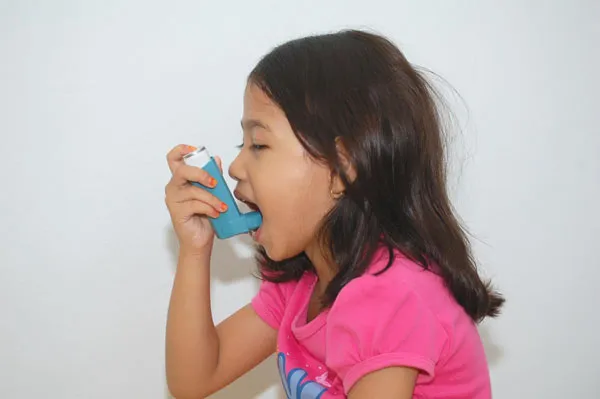
Mothers who are stressed-out may be making their children's asthma worse, according to a new study.
Children with asthma whose mothers were angry or irritated or suppressed their emotions were more likely to have serve asthma symptoms a year after the study started than children whose mothers did not respond to stress in this way. However, these findings only held true for children under 7.
For older children, having a mother who was over-protective and frequently interfered in the child's life was associated with worse asthma symptoms.
"Our results suggest that the mothers of younger children may be advised not to worry about falling into 'unfavorable' parenting styles, but to pay more attention to the reduction of their own stress ," Jun Nagano, of the Kyushu University Institute of Health Science in Fukuoka, Japan, said in a statement. Mothers of older children should be careful not to interfere too much in their children's lives.
Angry moms
Previous studies have shown that a mother's mental health for instance, if she is depressed and her parenting style may influence the severity of her child's asthma. However, most of these studies asked participants about their past behavior and their child's asthma symptoms, and did not follow subjects over time.
The new study involved 273 mothers of children with asthma, ages 2 through 12, who visited the National Fukuoka Hospital in Japan between February and August 2001.
Get the world’s most fascinating discoveries delivered straight to your inbox.
The mothers filled out surveys about their children's asthma symptoms including the intensity and frequency of attacks their parenting styles and their response to stress. They completed the same surveys one year later.
Children under 7 whose mothers scored high on tests designed to measure anger had 5.5 times the chance of developing severe asthma symptoms as children whose mothers did not score high on anger tests. Those with highly irritated mothers had 13.6 times the chance of developing serve symptoms.
Children over 7 whose mothers interfered with their lives had 4.3 times the chance of having severe asthma symptoms.
Showing stress
The findings suggest a mother's stress may be conveyed to the child, either through words or behaviors. Studies have shown that sadness induces airway contraction, which may worsen asthma symptoms, while happiness induces airway relaxation, the researchers said.
The child's response to their parents' stress may also vary by age. Older children in this study did not appear susceptible to their mother's anger or irritation. But excessive interference in the child's life when they are older may prevent the child from becoming independent, and contribute to the persistence of their allergic reactions, the researchers said.
The researchers note the findings are based on the mothers' reports of their children's symptoms, which may affect their accuracy. Also, the study did not take into account the feelings of the children, which may have influenced the results.
The findings were published today (Oct. 7) in the journal BioPsychoSocial Medicine.
- Kids with Severe Asthma May Have Been Misdiagnosed
- 'Thirdhand Smoke' Especially Harmful For Asthma Sufferers
- Hair Holds the Key to Measuring Chronic Stress

Rachael is a Live Science contributor, and was a former channel editor and senior writer for Live Science between 2010 and 2022. She has a master's degree in journalism from New York University's Science, Health and Environmental Reporting Program. She also holds a B.S. in molecular biology and an M.S. in biology from the University of California, San Diego. Her work has appeared in Scienceline, The Washington Post and Scientific American.