













Real 'Pirate of the Caribbean' Was Funded By Politicians
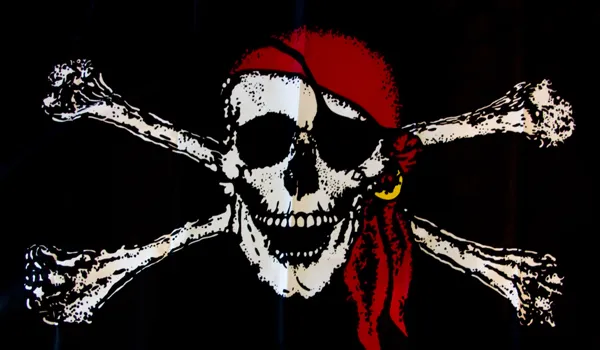
The infamous William "Captain" Kidd, often portrayed as an unlawful pirate that played by his own set of rules, was actually hired by high-profile politicians and businessmen to loot ships. But when he was charged with unlawfully attacking a merchant ship, he was unjustly tried for piracy.
"As Britain began to expand her empire, pirates could quite literally be found walking the streets of London," Tom Wareham, curator of maritime and community history at the Museum of London Docklands, told CNN.com. "It was in this city that shady deals with mysterious and powerful financial backers funded a great deal of piracy around the world."
The Museum of London Docklands is currently showing an exhibit focusing on Captain Kidd , a Scottish sailor who was tried for piracy and the murder of a crew member, and subsequently hanged in 1701. The exhibit contains documents proving that Kidd was a privateer a private person who had been authorized by government officials to attack foreign ships during wartime.
"He was actually a privateer, a mercenary licensed by the government to loot merchant ships flying the colors of England's enemies mainly France and Spain," Wareham said. Such arrangements were common during the "golden age" of piracy during the 17th century, with corrupt officials hiring sailors to do their dirty work.
"Many of them were men who had been press-ganged into the navy during war-time, only then to find themselves jobless when it was over," Wareham explained. "They didn't have much else going for them and in many cases would have simply drifted into a life of piracy."
Kidd was hired by a group of leading English government figures, including two earls, two lords and the First Lord of the Admiralty, who signed an agreement with him that unscrupulously skirted around legislation that was in place at the time to govern privateering contracts.
These employers were rivals of the East India Company, a powerful English trading corporation that exported exotic goods from the Indian sub-continent. Kidd was ordered to loot several of the company's merchant ships. In retaliation, the East India Company pulled some strings and had him arrested for piracy on the grounds that an Armenian merchant ship that Kidd had attacked was not a legitimate target for a privateer, despite the fact that it had sailed under a French pass.
Get the world’s most fascinating discoveries delivered straight to your inbox.
Once in custody, Kidd was subjected to a biased and unfair trial and was sentenced to death by hanging. During the trial, witnesses were bribed, crucial reports proving Kidd's innocence mysteriously disappeared and he was barred from presenting evidence, according to government documents and Kidd's own personal notes and letters, some of which are currently on display at the Museum of London Docklands.
Follow Remy Melina on Twitter @RemyMelina.