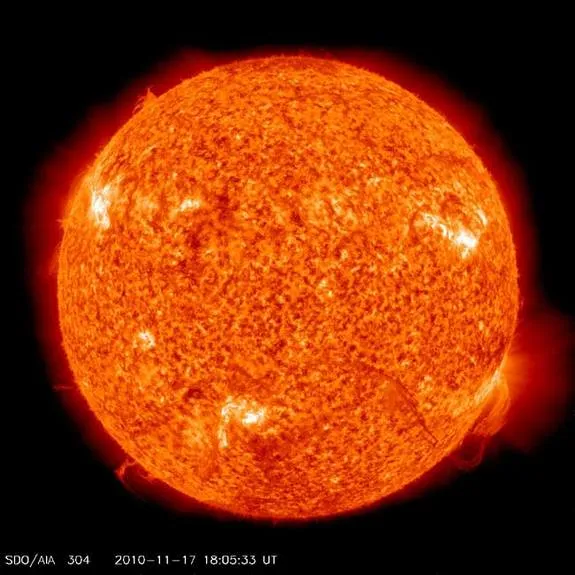
What Does the Sun Burn?
Get the world’s most fascinating discoveries delivered straight to your inbox.
You are now subscribed
Your newsletter sign-up was successful
Want to add more newsletters?
Delivered Daily
Daily Newsletter
Sign up for the latest discoveries, groundbreaking research and fascinating breakthroughs that impact you and the wider world direct to your inbox.
Once a week
Life's Little Mysteries
Feed your curiosity with an exclusive mystery every week, solved with science and delivered direct to your inbox before it's seen anywhere else.
Once a week
How It Works
Sign up to our free science & technology newsletter for your weekly fix of fascinating articles, quick quizzes, amazing images, and more
Delivered daily
Space.com Newsletter
Breaking space news, the latest updates on rocket launches, skywatching events and more!
Once a month
Watch This Space
Sign up to our monthly entertainment newsletter to keep up with all our coverage of the latest sci-fi and space movies, tv shows, games and books.
Once a week
Night Sky This Week
Discover this week's must-see night sky events, moon phases, and stunning astrophotos. Sign up for our skywatching newsletter and explore the universe with us!
Join the club
Get full access to premium articles, exclusive features and a growing list of member rewards.
For millennia, people have looked up to the sky and wondered about celestial bodies. The sparkling stars and fiery sun hold mystery and wonder. To astronomers, the sun is just another dying star, but to everyone else it’s a huge burning ball that gives heat, light, and life. So far so good.
But what is it burning? We all know that there is no air in space, and therefore no oxygen to burn. In our everyday experience, the only burning most of us are familiar with is fire combustion. But that is not the only type of reaction; the sun is indeed burning, but it is a nuclear reaction, not a chemical one.
The sun burns hydrogen — a lot of it, several hundred million tons per second. But don’t worry; there’s plenty more where that came from; by most estimates, the sun has enough fuel for about another five billion years.
Follow Life's Little Mysteries on Twitter @llmysteries. We're also on Facebook & Google+.
Get the world’s most fascinating discoveries delivered straight to your inbox.