














What Waters Are Safe for Sharks?
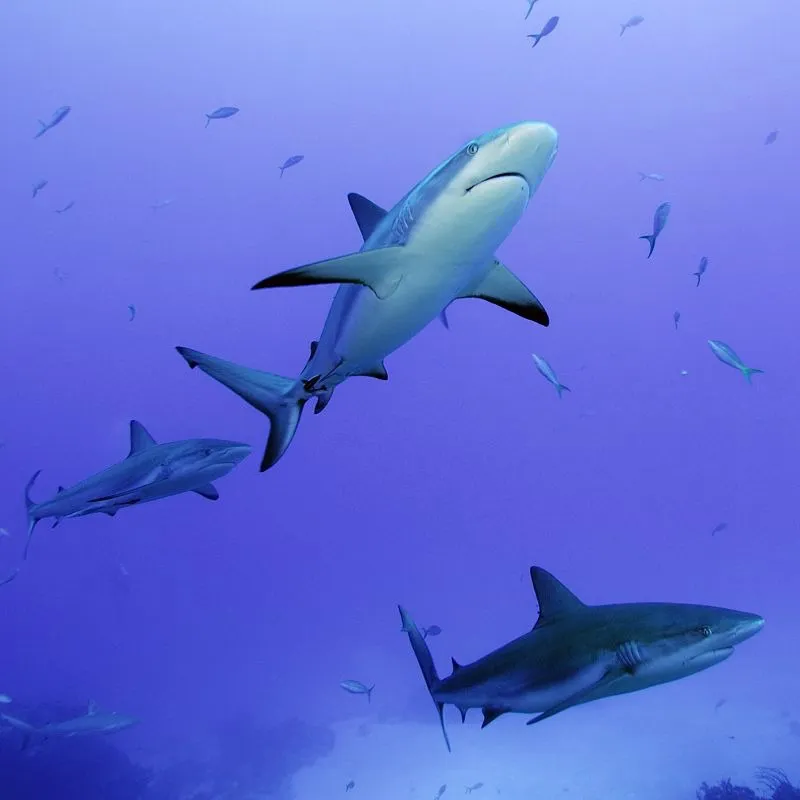
A growing number of countries are looking out for sharks—and not in a get-out-of-the-water kind of way.
They are realizing that many populations are plummeting and that the animals need protection. In the last few years, about a half-dozen countries have created nearly 2 million square miles of sanctuaries where commercial shark fishing is banned.
And in many other places, officials have significantly restricted shark fishing, forbidden the sale or possession of fins, or prohibited finning—the process of slicing off a shark’s fins and dumping the animal back in the water, where it drowns or bleeds to death.
So if you’re in the market for a dive experience to swim with these animals or just want to know who’s shark-friendly, here’s a breakdown of some of the most notable recent protections.
Just last month Venezuela joined the growing list of countries that are creating safe havens for sharks. The government set up a 1,440-square-mile breeding sanctuary in archipelagos that contain 40 percent of shark species found in the Caribbean Sea. Similar sanctuaries have been created in Palau, Maldives, Honduras, the Bahamas, Tokelau and the Marshall Islands—the world's largest so far.
HSW: Shark Finning - The Big Picture of a Big Problem
Get the world’s most fascinating discoveries delivered straight to your inbox.
About another 1 million square miles may be added if the Federated States of Micronesia moves forward with its plan to create a regional sanctuary in the next year.
Many countries have banned shark finning, including the United States and just about all Western Hemisphere countries. Finning also is restricted in Australia and in the European Union, although much room exists to strengthen the current policies in the EU. Regional organizations that govern activity on the high seas have severely limited the practice in most of the world’s oceans.
Some countries and local governments are taking an extra step by curbing the supply of shark fins. Hawaii’s 2010 fin ban was the first in the United States to make it a crime to possess, sell, offer for sale, trade or distribute fins. California, Oregon, Washington, Illinois, Guam and the Northern Mariana Islands followed Hawaii’s lead by approving similar measures. Some bans are more comprehensive or strict than others. For example, penalties vary from as low as $100 in California to up to $100,000 and five years’ imprisonment in Guam. All of the bans apply only to fins, leaving the animals vulnerable in other ways because it’s still ok to trade and sell products, such as vitamin supplements, that use other shark parts.
ANALYSIS: US Shark Fin Soup Appalling and Widespread
More vulnerable shark species are winning protections through international agreements and regional rules. But many of those efforts are piecemeal and scattered around the world. For example, in areas of the Atlantic Ocean, it is illegal to keep six species of hammerheads. Yet these sharks do not enjoy the same protections in other oceans.
Sharks may be getting more of a break than they used to, but there’s a long way to go before the ocean’s top predator can be assured that humans aren’t getting the upper hand.
A new analysis by the Pew Environment Group, Navigating Global Shark Conservation Measures: Current Measures and Gaps, compiles existing management measures for sharks, highlights their inadequacies and makes recommendations for improvements. For a summary of that analysis, visit www.PewEnvironment.org/Sharks.
This story was provided by Discovery News.