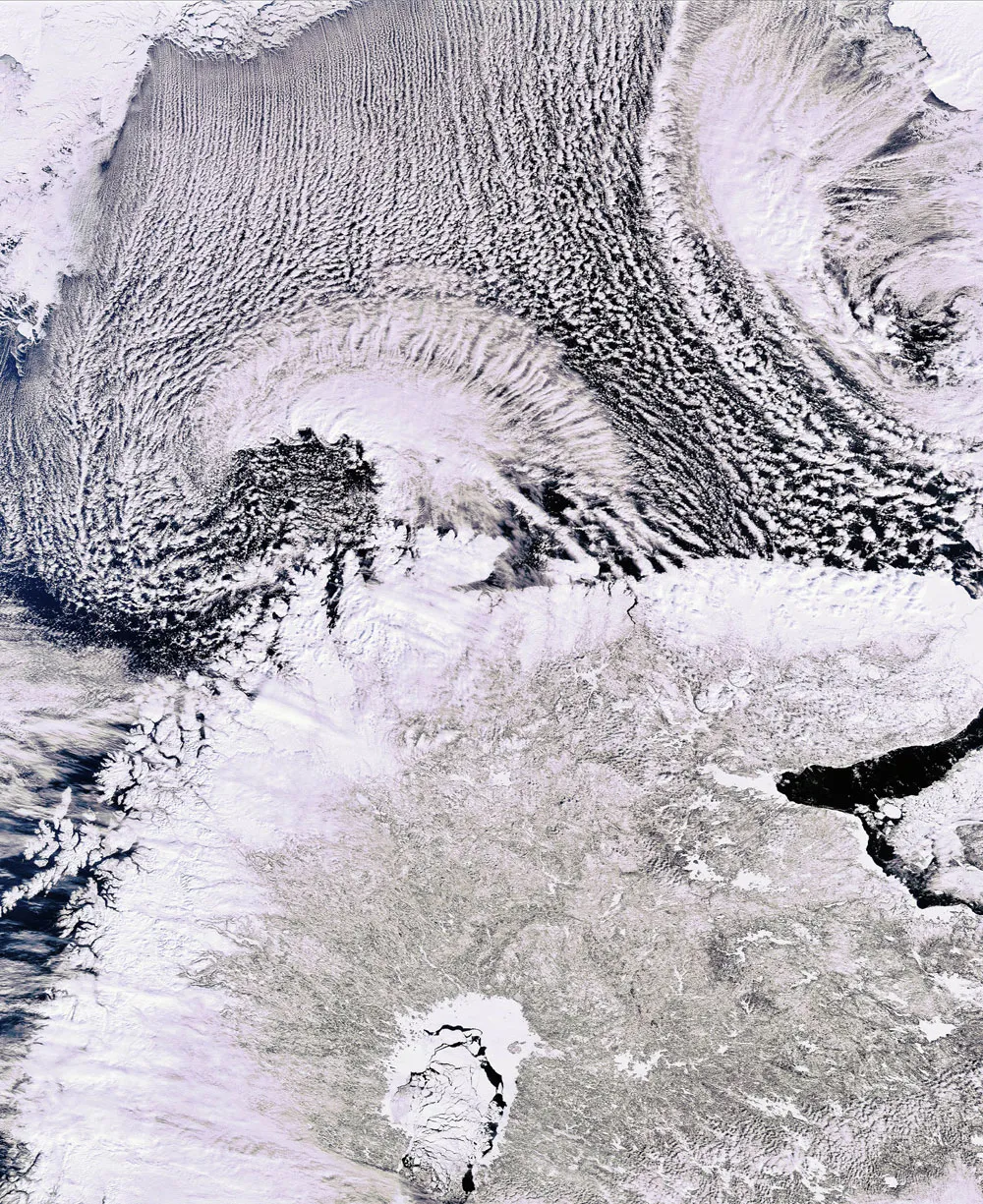
'Clouds Streets' Over Scandinavia
Get the world’s most fascinating discoveries delivered straight to your inbox.
You are now subscribed
Your newsletter sign-up was successful
Want to add more newsletters?
Delivered Daily
Daily Newsletter
Sign up for the latest discoveries, groundbreaking research and fascinating breakthroughs that impact you and the wider world direct to your inbox.
Once a week
Life's Little Mysteries
Feed your curiosity with an exclusive mystery every week, solved with science and delivered direct to your inbox before it's seen anywhere else.
Once a week
How It Works
Sign up to our free science & technology newsletter for your weekly fix of fascinating articles, quick quizzes, amazing images, and more
Delivered daily
Space.com Newsletter
Breaking space news, the latest updates on rocket launches, skywatching events and more!
Once a month
Watch This Space
Sign up to our monthly entertainment newsletter to keep up with all our coverage of the latest sci-fi and space movies, tv shows, games and books.
Once a week
Night Sky This Week
Discover this week's must-see night sky events, moon phases, and stunning astrophotos. Sign up for our skywatching newsletter and explore the universe with us!
Join the club
Get full access to premium articles, exclusive features and a growing list of member rewards.
They may look fake, but the clouds in this striking pattern are a natural phenomenon know as "clouds streets."
The European Space Agency's (ESA) Envisat satellite snapped this picture of the cloud streets just north of the northern part of the Scandinavian peninsula, home to Norway and Sweden, and the largest peninsula in Europe.
The cloud streets have formed over the Barents Sea due to a mixture of heat, moisture and wind, according to an ESA statement. In this image, taken on April 5, 2009, cold, dry air masses over the ice are flowing from the north to the south. The cloud streets align with the direction of the wind.
The clouds, commonly found at the border between ice and sea, get their stretched shape through processes related to the high wind speeds at the edge of the ice.
Get the world’s most fascinating discoveries delivered straight to your inbox.