
















What's That Tree? New Leaf-ID App Can Tell You

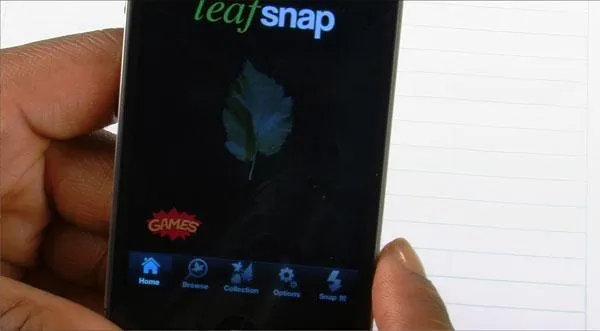
Nature and gadget lovers, this one's for you: a mobile app that lets you ID the species of any leaf or tree while you're out on the trail or taking a walk in the park.
The app, called Leafsnap, uses a visual search that allows users to identify tree specie s simply by taking a photograph of the tree's leaves.
In addition to the species name, Leafsnap provides high-resolution photographs and information about the tree's flowers, fruit, seeds and bark a digital field guide.
"Traditional field guides can be frustrating you often do not find what you are looking for. We thought we could redesign them using today's smartphones and visual recognition technology," said Peter Belhumeur, professor of computer science at Columbia University and leader of the Columbia team working on Leafsnap.
Leafsnap's visual identification system builds on the existing technology for facial recognition. Each leaf photograph is matched against the images in a leaf library using numerous measurements computed at points along the leaf's outline. The best matches are then ranked and returned to the user for final verification.
The app got its start when David Jacobs of the University of Maryland and Belhumeur approached John Kress, research botanist at the Smithsonian Institution's National Museum of Natural History, to collaborate on remaking the traditional field guide for the 21st century.
"Leafsnap was originally designed as a specialized aid for scientists and plant explorers to discover new species in poorly known habitats," Kress said.
Get the world’s most fascinating discoveries delivered straight to your inbox.
Kress was digitizing the botanical specimens at the Smithsonian when Jacobs and Belhumeur contacted him.
"Now Smithsonian research is available as an app for the public to get to know the plant diversity in their own backyards, in parks and in natural areas. This tool is especially important for the environment, because learning about nature is the first step in conserving it," Kress said.
Users of the app also will be contributing to science. As people use Leafsnap, the free mobile app automatically shares their images, species identifications and the tree's location with a community of scientists. These scientists will use the information to map and monitor population growth and decline of trees nationwide.
Currently, Leafsnap's database includes the trees of the Northeast, but it will soon expand to cover the trees of the entire continental United States.
The app is available for the iPhone, and iPad and Android versions are to be released this summer.
