
















Gone in 5 Years? Popular Asian Beach Vanishing

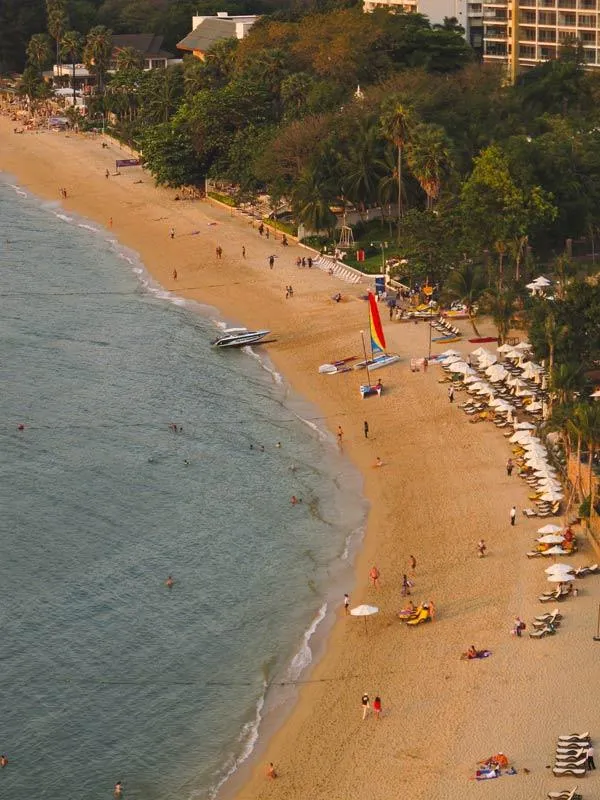
Thailand's Pattaya Beach, one of Asia's largest resort areas, is disappearing at the stunning rate of more than 6.5 feet (2 meters) per year, gobbled up by erosion caused by ocean currents and encroaching urban development.
Located on the Gulf of Thailand about 90 miles (150 kilometers) southeast of Bangkok, Pattaya Beach a destination for sun-seekers, golfers and those in search of racy nightlife could disappear in less than five years , Thai scientists are saying, according to the news service Reuters.
"If we do nothing about it, the beach will disappear in the near future you can see that (in) some areas the beach has already gone," Thanawat Jarupongsakul, a marine and coastal erosion expert at Bangkok's Chulalongkorn University, told Reuters.
In 1952, beachgoers frolicked on 115 feet (35 meters) of sand. Now 10 to 16 feet (3 to 5 meters) of beach remains.
Thanawat said up to 7.76 million cubic feet (220,000 cubic meters) of sand would be needed to widen the shore. The added sand would extend the beach more than 100 feet (30 m) into the gulf. A further 5.3 million cubic feet (150,000 cubic meters) will be required every 15 years to prevent further shrinking, Reuters reported.
"Many countries have done this," Thanawat said, adding that, in the past, authorities would have built some sort of structure to halt erosion, but an ugly addition to the beach could have many negative effects.
The sand plan could cost more than $19 million (600 million baht).
Get the world’s most fascinating discoveries delivered straight to your inbox.
"If we have (the) budget, I think this project could be finished in one to two years," Thanawat said.
