














Utah Canyon Fire Photographed from Space

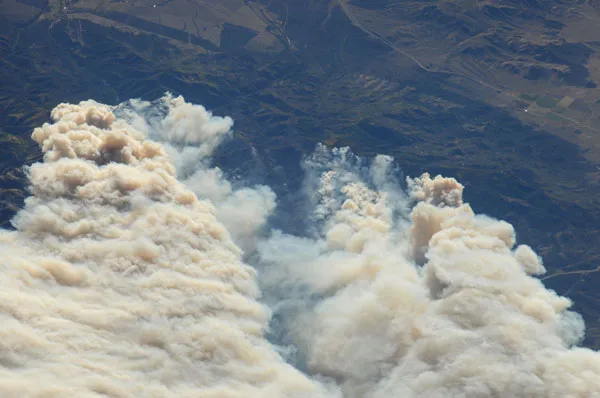
Clouds of smoke from the Twitchell Canyon Fire, near central Utah's Fishlake National Forest, were photographed by astronauts aboard the International Space Station.
The fire has so far covered (33,071 acres (13,383 hectares); it was started by a lightning strike in July. Over 500 firemen have since been working to put the wildfire out.
This detailed image shows smoke plumes generated by several fire spots close to the southwestern edge of the burned area. Unlike many of the other pictures taken of the fire, that look down directly on it, this one was taken from a point approximately 316 miles (509 km) to the northeast, near the Colorado-Wyoming border.
The Twitchell Canyon Fire, the largest of the fires to result from the lightning strike, burned through conifer and juniper forest in the remote mountains of central Utah.
Luckily, the Twitchell Canyon region is sparsely populated, and the fire poses no threat to people living in the region, though a number of National Park Service facilities may fall prey to the fire.
- Natural Disasters: Top 10 U.S. Threats
- Massive Thunderstorms Are Traced to Intense Wildfires
- FAQ: The Science and History of Wildfires
Get the world’s most fascinating discoveries delivered straight to your inbox.
